
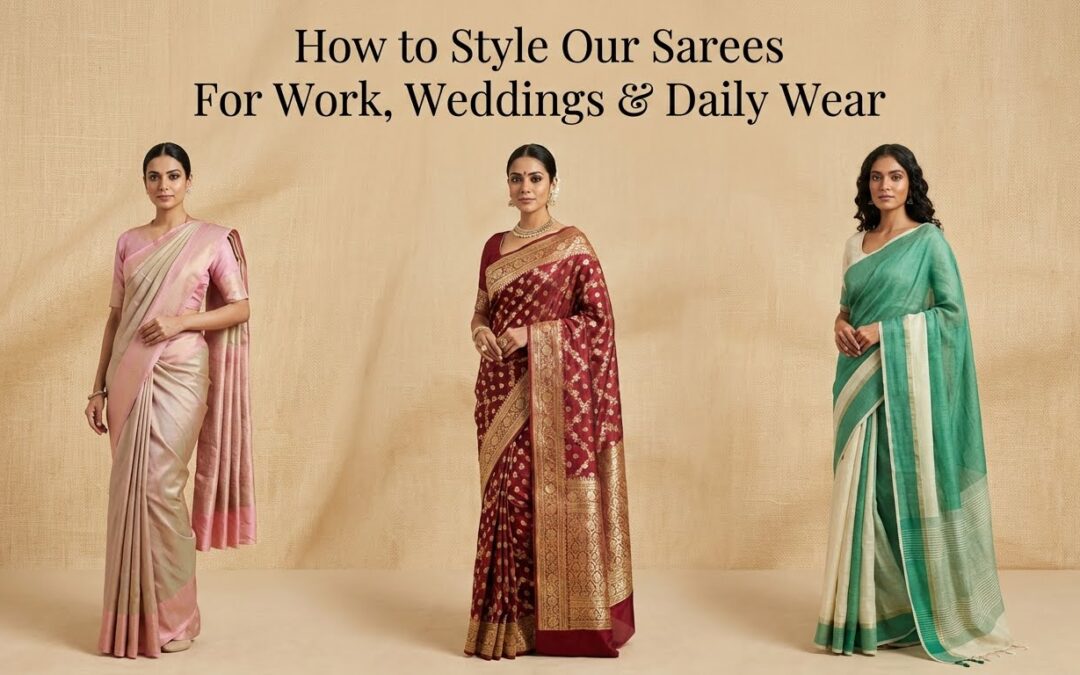
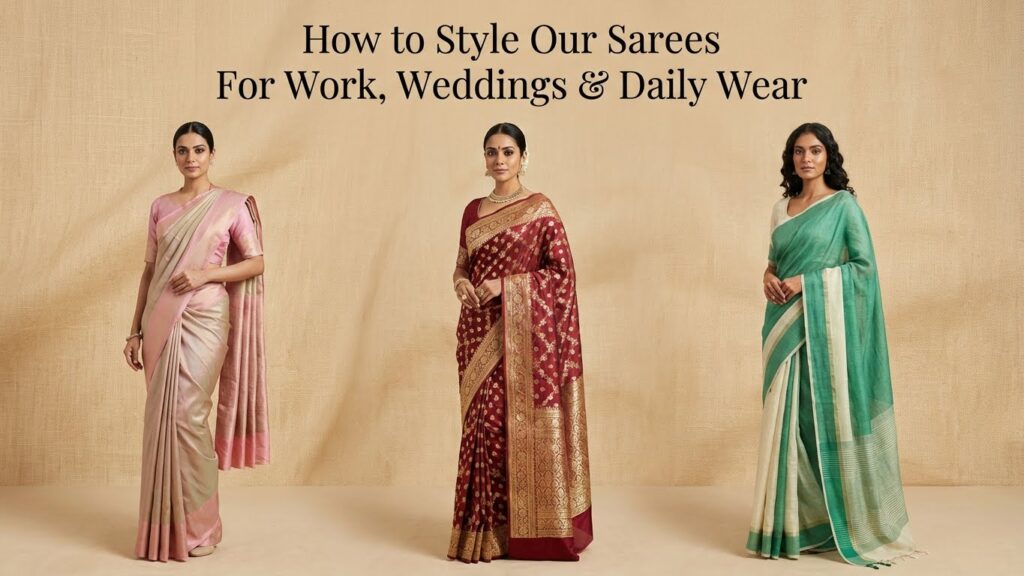
Learning how to style our sarees properly can transform your entire look. For work, choose cotton or linen sarees with neat pleats and minimal jewelry. For weddings, select silk sarees like Banarasi or Paithani with heavy borders and pair them with statement jewelry. For daily wear, opt for lightweight fabrics like georgette or synthetic sarees with comfortable draping styles. The key is matching the fabric, draping style, and accessories to your occasion while keeping your comfort in mind.
Contents
- 1 Introduction: The Art of Saree Styling
- 2 Understanding Different Saree Fabrics
- 3 Your Trusted Source: Mahaveera Textiles
- 4 How to Style Our Sarees for Work
- 5 How to Style Our Sarees for Weddings
- 6 How to Style Our Sarees for Daily Wear
- 7 Draping Techniques That Make a Difference
- 8 Blouse Styles That Complement Different Sarees
- 9 Jewelry and Accessories for Saree Styling
- 10 Color Coordination and Pattern Matching
- 11 Body Type Considerations
- 12 Seasonal Saree Styling
- 13 Common Mistakes to Avoid
- 14 Quick Styling Tips and Hacks
- 15 Creating Your Personal Saree Style
- 16 Caring for Your Saree Collection
- 17 Frequently Asked Questions
- 17.1 How do I choose the right saree fabric for my first time?
- 17.2 What is the best draping style for beginners?
- 17.3 How many safety pins do I need to wear a saree?
- 17.4 Can I wear sarees to work every day?
- 17.5 What shoes should I wear with sarees?
- 17.6 How do I keep my saree pleats from opening?
- 17.7 What blouse color goes with everything?
- 17.8 How long should my saree be?
- 17.9 Can I wear sarees if I am plus-size?
- 17.10 How do I prevent my saree from getting dirty at the hem?
- 17.11 What is the difference between silk and art silk sarees?
- 17.12 How do I store sarees to prevent damage?
- 17.13 What jewelry should I wear with simple cotton sarees?
- 17.14 How do I walk comfortably in a saree?
- 17.15 Can sarees be worn in all seasons?
- 18 Conclusion
Introduction: The Art of Saree Styling
The saree is more than just clothing. It represents culture, elegance, and timeless beauty. But many women struggle with one simple question: how do I style our sarees for different occasions?
Whether you need a professional look for the office, a stunning appearance for a wedding, or a comfortable outfit for daily activities, knowing how to style our sarees correctly makes all the difference.
This guide will teach you everything about saree styling. You will learn which fabrics work best for each occasion, how to drape them properly, and what accessories complete your look. By the end, you will feel confident wearing sarees anywhere.
Understanding Different Saree Fabrics
Before learning how to style our sarees, you must understand the fabrics. Each material has unique qualities that make it suitable for specific occasions.
Silk Sarees
Silk sarees are the queens of elegance. They have a natural shine and fall beautifully when draped. These sarees work perfectly for weddings, festivals, and formal events. The fabric feels smooth and looks rich.
Pure silk sarees can be heavy, so they need proper draping. The pleats must be firm and well-set. Silk sarees hold their shape throughout the day.
Banarasi Silk Sarees
Banarasi silk sarees come from Varanasi and feature intricate brocade work. Gold and silver threads create stunning patterns on these sarees. They are heavy and extremely formal.
When you style our sarees in Banarasi silk, you make a grand statement. These sarees suit weddings, receptions, and important ceremonies. The rich texture and detailed work catch everyone’s attention.
Paithani Silk Sarees
Paithani silk sarees are traditional treasures from Maharashtra. They have distinctive borders and pallus with peacock and lotus motifs. The fabric combines silk threads in vibrant colors.
These sarees are perfect for cultural events and traditional functions. When you learn how to style our sarees in Paithani silk, you preserve heritage while looking elegant.
Cotton Sarees
Cotton sarees are breathable and comfortable. They absorb sweat and keep you cool in hot weather. These sarees are perfect for daily wear and office settings.
Cotton comes in many varieties. Some have simple designs, while others feature block prints or handloom patterns. Cotton sarees are easy to maintain and affordable.
Khadi Cotton Sarees
Khadi cotton represents handspun and handwoven fabric. These sarees have a slightly rough texture but are extremely comfortable. They promote traditional craftsmanship.
Khadi cotton sarees work well for casual outings and daily wear. They are environmentally friendly and support local artisans.
Linen Sarees
Linen sarees are gaining popularity for their crisp texture. They resist wrinkles better than cotton and have a natural elegance. Linen sarees suit professional environments perfectly.
These sarees keep you cool and look sophisticated. They come in solid colors and subtle patterns. When you style our sarees in linen, you achieve a modern, polished appearance.
Georgette Sarees
Georgette is a lightweight, flowing fabric. It drapes easily and creates beautiful pleats. Georgette sarees have a slight sheer quality and soft texture.
These sarees work for both casual and semi-formal occasions. They are comfortable to wear all day and look effortless. Georgette sarees suit beginners learning how to style our sarees.
Chiffon Sarees
Chiffon sarees are extremely lightweight and delicate. They have a glossy finish and transparent quality. Chiffon drapes like a dream and moves gracefully.
These sarees are perfect for parties and evening events. However, they need careful handling. When you style our sarees in chiffon, you create an elegant, flowing silhouette.
Synthetic Sarees
Synthetic sarees are made from polyester or mixed fabrics. They are affordable, durable, and easy to maintain. These sarees resist wrinkles and dry quickly.
Synthetic sarees work well for daily wear and office use. They come in countless designs and colors. Many synthetic sarees mimic the look of silk or chiffon at lower prices.
Art Silk Sarees
Art silk (artificial silk) sarees look like real silk but cost less. They have a shiny finish and rich appearance. Art silk sarees are perfect for those who want the silk look without the high price.
These sarees suit festivals, parties, and casual weddings. When you style our sarees in art silk, you get elegance without breaking your budget.
Your Trusted Source: Mahaveera Textiles
When you want to learn how to style our sarees with authentic, high-quality fabrics, finding the right supplier matters. Mahaveera Textiles, located on M.C Road in Chennai, has built a strong reputation for offering an extensive collection of sarees that cater to every occasion and budget.
At Mahaveera Textiles, you will find silk sarees that shimmer with elegance, linen sarees perfect for professional settings, and comfortable cotton options for daily wear. Their collection includes traditional Banarasi silk and Paithani silk sarees for weddings, lightweight georgette and chiffon sarees for parties, practical synthetic sarees for everyday use, and eco-friendly khadi cotton varieties. They also stock art silk sarees that deliver the luxurious look of silk at accessible prices.
What sets Mahaveera Textiles apart is their understanding that styling sarees begins with choosing the right fabric and quality. Their experienced staff helps customers select sarees that match their specific needs, whether you need a professional office look, a stunning wedding appearance, or comfortable daily wear. You can visit their store on M.C Road in Chennai or call them at 9841120762 to explore their complete range and get personalized styling advice that brings your saree vision to life.
How to Style Our Sarees for Work
Creating a professional look with sarees requires careful choices. Your work saree should look polished, feel comfortable, and allow easy movement.
Choosing the Right Fabric for Office
For work, select cotton, linen, or synthetic sarees. These fabrics breathe well and stay neat throughout the day. Avoid heavy silks or delicate chiffons that need constant adjustment.
Cotton sarees in solid colors or subtle patterns work best. Linen sarees in neutral tones create a sophisticated appearance. Synthetic sarees with minimal embellishments are practical choices.
Professional Draping Styles
The Nivi drape is the most common style for offices. It creates neat pleats in front and allows comfortable sitting and walking. Make sure your pleats are firmly pinned and evenly spaced.
Keep the pallu length moderate. It should rest on your shoulder without dragging or flying around. Pin the pallu securely to avoid constant readjustment.
Color Selection for Work Sarees
Choose understated colors for the office. Navy blue, black, grey, beige, brown, and soft pastels work well. Avoid bright neon colors or heavily printed sarees.
If you want patterns, choose small prints, stripes, or subtle designs. Large, bold prints can look too casual for professional settings.
Blouse Styles for Office Sarees
Your blouse should have a modest neckline and adequate coverage. Sleeveless blouses are generally not suitable for office wear. Choose full sleeves or half sleeves.
The blouse should fit properly without being too tight or loose. Simple designs in matching or contrasting colors work best. Avoid heavy embellishments or backless designs.
Accessories for Work Sarees
Keep jewelry minimal and elegant. Small earrings, a thin chain, and a watch are sufficient. Avoid large, dangling jewelry that makes noise or gets in the way.
Choose a professional handbag that matches your saree. Closed-toe footwear or simple sandals complete the look. Your accessories should enhance your appearance without overwhelming it.
Makeup for Professional Saree Look
Keep makeup natural and subtle. Use light foundation, neutral eyeshadow, and nude or pink lipstick. Avoid heavy makeup or dramatic eye looks.
Your hair should be neatly styled. A low bun, ponytail, or neat braid works well. Avoid messy hairstyles or loose hair that needs constant fixing.
Practical Tips for Office Sarees
Choose sarees with firm borders. They hold pleats better and look neater. Practice draping at home until you feel comfortable.
Keep safety pins handy in your bag. Have a small sewing kit for emergency repairs. Check your pleats before important meetings.
When you understand how to style our sarees for work, you project confidence and professionalism while honoring tradition.
How to Style Our Sarees for Weddings
Weddings are the perfect occasion to wear stunning sarees. You can experiment with rich fabrics, bold colors, and statement jewelry.
Selecting Wedding Sarees
For weddings, choose silk sarees, Banarasi silk, Paithani silk, or heavily embellished chiffon and georgette sarees. These fabrics have the richness that suits celebrations.
Look for sarees with intricate borders, zari work, embroidery, or sequin embellishments. Heavy sarees create a grand, festive appearance.
Best Colors for Wedding Sarees
Wedding sarees can be bold and vibrant. Red, maroon, royal blue, emerald green, purple, and gold are popular choices. These colors photograph beautifully.
For day weddings, you can choose lighter shades like peach, pink, or mint green. Evening weddings call for deeper, richer colors.
Draping Styles for Weddings
The classic Nivi drape works for weddings, but you can try variations. The Bengali drape, Gujarati style, or butterfly drape add uniqueness to your appearance.
Make sure your pleats are perfect. Consider getting professional help for draping if you are not confident. Well-set pleats last longer and look better in photographs.
Statement Blouses for Wedding Sarees
Wedding blouses can be elaborate. Choose designs with heavy embroidery, sequin work, or unique cuts. Backless, halter neck, or boat neck blouses add glamor.
Make sure the blouse complements your saree without competing with it. If your saree is heavily embellished, choose a simpler blouse. If your saree is plain, you can wear an ornate blouse.
Jewelry for Wedding Sarees
Weddings are the time for statement jewelry. Wear gold, kundan, temple jewelry, or polki sets. Match your jewelry to your saree color and style.
Don’t overload yourself with jewelry. Choose either a heavy necklace with simple earrings or elaborate earrings with a simple chain. Balance is important.
Bangles, maang tikka, and waistbands add to the traditional look. Make sure your jewelry is comfortable enough to wear for several hours.
Hairstyles for Wedding Sarees
Traditional buns decorated with flowers suit wedding sarees perfectly. You can also choose braids with jasmine strings or loose curls pinned on one side.
Match your hairstyle to your saree style. Traditional sarees look best with traditional hairstyles. Modern saree styles can pair with contemporary hairstyles.
Makeup for Wedding Sarees
Wedding makeup can be more dramatic than daily makeup. Use foundation, contouring, bold eye makeup, and bright lipstick.
Make sure your makeup complements your saree color. Red sarees pair well with gold eye makeup and red lips. Blue sarees look great with silver or blue eyeshadow.
Footwear for Wedding Sarees
Choose embellished sandals or heels that match your saree. Silver and gold footwear are versatile choices that work with most colors.
Make sure your footwear is comfortable. You will be standing and walking for hours. Break in new shoes before the wedding day.
Complete Wedding Look Tips
Consider the wedding location and time. Outdoor afternoon weddings need lighter sarees than indoor evening receptions. Plan your look accordingly.
Practice wearing your complete outfit before the event. Make sure everything fits properly and you can move comfortably. When you know how to style our sarees for weddings, you become the star of every celebration.
How to Style Our Sarees for Daily Wear
Daily wear sarees should prioritize comfort, ease of maintenance, and practicality. You want to look good without spending too much time or effort.
Best Fabrics for Daily Wear
Cotton sarees are perfect for daily wear. They are comfortable, breathable, and easy to wash. Khadi cotton offers extra comfort and supports traditional crafts.
Synthetic sarees work well for daily use because they resist wrinkles and dry quickly. Lightweight georgette sarees are also good options for everyday wear.
Simple Draping for Daily Sarees
The basic Nivi drape works best for daily wear. It is quick, comfortable, and stays in place. Make neat pleats and pin them securely.
You can try the seedha pallu style where the pallu hangs in front. This style is easier and more comfortable for household work.
Comfortable Colors and Patterns
For daily wear, choose practical colors that hide stains. Medium to dark shades work better than pure white or cream. Small prints and patterns are more forgiving than solid colors.
Floral prints, geometric patterns, and traditional designs add interest to daily sarees. Choose patterns that don’t require special care or ironing.
Simple Blouse Designs
Daily wear blouses should be simple and comfortable. Basic round neck or V-neck blouses with short or elbow-length sleeves work well.
Choose cotton blouses for cotton sarees. They absorb sweat and feel comfortable in hot weather. Keep several basic blouses in neutral colors that match multiple sarees.
Minimal Accessories for Daily Sarees
For daily wear, keep accessories simple. Small earrings, a simple chain, and a watch are enough. You can add bangles if you like.
Choose practical footwear like comfortable sandals or slippers. Your accessories should be lightweight and non-restrictive.
Easy Maintenance Tips
Choose sarees that are easy to wash and maintain. Cotton and synthetic sarees can be machine-washed. Read care instructions before purchasing.
Iron your sarees while they are slightly damp for easier pressing. Store them neatly to avoid heavy wrinkles. When you understand how to style our sarees for daily wear, dressing up becomes effortless.
Time-Saving Daily Saree Tips
Keep pre-pleated sarees ready for busy mornings. You can pleat and pin sarees the night before. This saves time when you are rushing.
Have a dedicated saree area in your wardrobe. Organize sarees by color or occasion for quick selection. Keep matching blouses with each saree.
Create a daily saree capsule wardrobe. Five to seven versatile sarees in different colors can create multiple looks. This simplifies your morning routine.
Draping Techniques That Make a Difference
The way you drape a saree changes its entire appearance. Mastering different draping styles helps you style our sarees perfectly for any occasion.
The Classic Nivi Drape
This is the most common draping style. It creates neat pleats in the front and the pallu drapes over the left shoulder. The Nivi drape works for all occasions.
To achieve this drape, tuck one end of the saree at your waist. Make 5-7 pleats and tuck them at the center. Wrap the remaining fabric around your waist once, then bring it to the front. Create pallu pleats and drape over your shoulder.
The Bengali Style
Bengali draping does not use pleats in the front. The entire saree is wrapped around the body, and the pallu is brought from the back over the right shoulder and then over the left shoulder.
This style looks elegant and traditional. It suits silk sarees and wedding occasions. The no-pleat front creates a unique, flowing appearance.
The Gujarati Style
In Gujarati draping, the pallu comes in front instead of at the back. This creates a distinctive look where the decorative pallu is prominently displayed.
This style works well for heavily embellished sarees where you want to show off the pallu design. It is practical for outdoor events as the pallu does not fly around.
The Butterfly Drape
This modern style creates a butterfly-like appearance with the pallu. The pallu is pleated tightly and pinned across the shoulders, creating wing-like projections.
This style suits parties and contemporary events. It keeps the pallu secure and creates a fashion-forward look.
The Lehenga Style
This drape makes the saree look like a lehenga. The pleats are made in a different way to create a flared, skirt-like appearance. The pallu is draped like a dupatta.
This style works for weddings and festive occasions. It gives a young, trendy look while maintaining tradition.
Tips for Perfect Draping
Always start with the correct petticoat. It should match your saree color and fit properly at your waist. The petticoat length should be appropriate for your saree length.
Use good quality safety pins. Keep pins at strategic points: at the tuck, at the pleats, and on the pallu. This prevents the saree from coming undone.
Practice your chosen draping style multiple times before the actual occasion. This builds confidence and speeds up the process. When you master how to style our sarees through proper draping, you gain freedom to experiment.
Blouse Styles That Complement Different Sarees
The blouse is half the battle when you style our sarees. The right blouse can elevate a simple saree into something special.
Traditional Blouse Designs
Traditional blouses have simple round necks and short sleeves. They work with all types of sarees and suit conservative occasions. These blouses never go out of style.
Elbow-length sleeves offer more coverage and suit office settings. Full sleeves work well for formal events and colder weather.
Modern Blouse Cuts
Contemporary blouses feature unique necklines, interesting sleeve designs, and creative backs. Boat necks, square necks, and sweetheart necklines add variety.
Cold shoulder blouses, bell sleeves, and cape sleeves create modern looks. These designs suit parties and contemporary events.
Designer Blouses for Special Occasions
For weddings, choose blouses with heavy embroidery, sequin work, or zari embellishments. Backless or deep-back blouses add glamor.
Halter necks, off-shoulder styles, and corset designs make bold statements. These blouses work best with plain or subtly designed sarees.
Contrasting vs. Matching Blouses
Matching blouses create a harmonious, traditional look. This is the safest choice for formal events and offices. The blouse can be the same color as the saree body or border.
Contrasting blouses add visual interest and make the saree look different each time. A plain saree can be paired with multiple contrasting blouses for varied looks.
Choose contrast colors carefully. Complementary colors work well together. For example, a green saree with a red blouse or a blue saree with an orange blouse.
Readymade vs. Tailored Blouses
Readymade blouses are convenient but may not fit perfectly. They work well for casual sarees and daily wear. Check the fit before purchasing.
Tailored blouses fit your body perfectly and can be customized to your preferences. They are worth the investment for special occasion sarees.
Blouse Fabric Choices
Match your blouse fabric to your saree fabric. Cotton blouses for cotton sarees, silk blouses for silk sarees. This creates a balanced look.
For heavy sarees, you can choose a lighter blouse fabric for comfort. For sheer sarees, make sure your blouse provides adequate coverage.
Neckline Selection Guide
High necklines suit office wear and conservative events. They provide full coverage and look professional. Boat necks and mandarin collars are elegant options.
Medium necklines like round necks and V-necks are versatile. They work for multiple occasions and suit most face shapes.
Deep necklines like sweetheart and plunging V-necks suit evening events and parties. They require the right confidence and occasion.
Sleeve Length Guide
Sleeveless blouses suit parties and evening events. They show off your arms and jewelry. However, they are not appropriate for offices or traditional functions.
Short sleeves are the most versatile. They work for almost all occasions and weather conditions. They are comfortable and practical.
Three-quarter and full sleeves provide more coverage. They suit professional settings, traditional events, and colder weather. They also work well for those who prefer modest dressing.
Understanding blouse selection is essential when you learn how to style our sarees effectively.
Jewelry and Accessories for Saree Styling
The right accessories complete your saree look. They can transform a simple saree into something extraordinary.
Traditional Jewelry for Sarees
Gold jewelry is the traditional choice for sarees. Temple jewelry, antique gold, and kundan sets work beautifully with silk sarees. These pieces have cultural significance and timeless appeal.
Pearls create an elegant, sophisticated look. Pearl necklaces, earrings, and bangles suit both traditional and modern sarees. They work for daytime and evening events.
Contemporary Jewelry Options
Silver jewelry offers a modern, edgy look. Oxidized silver pieces work well with cotton sarees and casual wear. They are affordable and stylish.
Fashion jewelry in various materials and colors allows experimentation. You can match jewelry to your saree color or create interesting contrasts.
Statement jewelry makes bold impressions. Large earrings, chunky necklaces, or elaborate chokers become the focal point of your outfit. Pair statement pieces with simpler sarees.
Matching Jewelry to Occasions
For offices, keep jewelry minimal. Small earrings, a thin chain, and a watch are appropriate. Avoid noisy or dangling jewelry.
For weddings, wear elaborate jewelry sets. Necklaces, earrings, bangles, and maang tikka create complete traditional looks. Don’t hesitate to accessorize fully.
For daily wear, simple jewelry works best. Small earrings and bangles are enough. Choose comfortable pieces that don’t get in your way.
Handbag Selection
Your handbag should complement your saree. For formal events, choose clutches or small potli bags in matching or metallic colors.
For office wear, professional handbags in neutral colors work best. Make sure the bag is practical and holds your essentials.
For daily wear, comfortable shoulder bags or sling bags are practical. Choose colors that match multiple sarees.
Footwear Choices
Footwear completes your saree look. For traditional sarees, embellished sandals or Kolhapuri chappals work well. They add ethnic charm.
For formal sarees, heels or dressy sandals are appropriate. Choose comfortable height if you will stand for long periods.
For daily wear, comfortable flats or simple sandals are best. Prioritize comfort over style for everyday use.
Hair Accessories
Flowers are traditional saree accessories. Jasmine strings, roses, or gajras add fragrance and beauty to your hairstyle. They suit weddings and traditional events.
Hair clips, pins, and bands help secure your hairstyle. Choose decorative pieces for special occasions and simple ones for daily wear.
Maang tikka and hair chains suit bridal and wedding sarees. They add traditional elegance to your appearance.
Waist Accessories
Kamarbandh or waist chains add traditional charm to sarees. They define your waist and add sparkle. These work best with plain or lightly designed sarees.
Wear waist accessories for special occasions only. They can be uncomfortable for daily wear or office settings.
Seasonal Accessories
In summer, choose lightweight jewelry that doesn’t make you sweat. Avoid heavy pieces that feel uncomfortable in heat.
In winter, you can layer accessories. Shawls or stoles complement sarees and keep you warm. Choose colors that coordinate with your saree.
During monsoons, avoid delicate jewelry that might get damaged. Choose water-resistant accessories and practical footwear.
When you understand accessory selection, you truly master how to style our sarees for any situation.
Color Coordination and Pattern Matching
Choosing the right colors and patterns is crucial when you style our sarees. Good color choices enhance your appearance and suit the occasion.
Understanding Color Theory
Complementary colors sit opposite each other on the color wheel. They create vibrant, energetic looks. Examples include red and green, blue and orange, or yellow and purple.
Analogous colors sit next to each other on the color wheel. They create harmonious, pleasing combinations. Examples include blue, teal, and green, or red, orange, and yellow.
Monochromatic schemes use different shades of the same color. They create sophisticated, elegant looks. Different shades of blue or various tones of pink work well.
Colors That Suit Different Skin Tones
Fair skin tones look good in pastels, jewel tones, and bright colors. Navy, emerald, ruby red, and royal blue are excellent choices.
Medium skin tones can wear almost any color. Earthy tones, warm colors, and rich shades look particularly flattering. Rust, olive, mustard, and coral work well.
Dark skin tones look stunning in bright colors, metallics, and bold shades. Fuchsia, turquoise, gold, and vibrant yellow are beautiful choices.
Pattern Selection Guide
Small prints suit petite body types. They create proportionate looks without overwhelming smaller frames. Tiny florals, dots, and geometric patterns work well.
Large prints suit taller or larger body types. Bold patterns create striking appearances. Large florals, abstract designs, and big motifs look good.
Vertical patterns create an elongating effect. Stripes or vertical designs make you appear taller and slimmer.
Horizontal patterns add width. Border designs at the bottom create balance. Heavy border sarees work well for most body types.
Mixing Patterns and Solids
If your saree has busy patterns, choose a solid-colored blouse. This prevents visual chaos and keeps the focus on the saree.
If your saree is plain, you can wear a patterned blouse. This adds interest to your outfit. Make sure the blouse pattern coordinates with the saree color.
For heavily embellished sarees, keep everything else simple. Plain blouse, minimal jewelry, and simple hairstyle work best.
Occasion-Based Color Selection
For offices, choose muted, professional colors. Navy, black, grey, brown, and soft pastels work well. Avoid very bright or neon colors.
For weddings, embrace rich, vibrant colors. Red, maroon, royal blue, emerald green, and gold create festive appearances. Dark, rich colors photograph beautifully.
For daily wear, choose practical colors that hide stains. Medium shades work better than very light or very dark colors. Colors like teal, burgundy, or olive are practical.
For festivals, wear bright, happy colors. Yellow, orange, pink, and bright green suit celebrations. Traditional colors have cultural significance during festivals.
Creating Contrast with Borders
A saree with a contrasting border creates visual interest. The border should complement the body color. Classic combinations include navy with gold, red with green, or black with silver.
The border width should suit your height. Narrow borders suit shorter heights, while wider borders work for taller individuals.
Metallic Accents
Gold borders and accents suit warm-toned sarees. Red, orange, yellow, and warm pink sarees look beautiful with gold embellishments.
Silver borders suit cool-toned sarees. Blue, purple, green, and cool pink sarees pair well with silver accents.
Both gold and silver can work with neutral colors like black, white, or ivory. Choose based on your jewelry preference.
Understanding color and pattern selection is essential when you learn how to style our sarees with confidence.
Body Type Considerations
Different body types suit different saree styles. Understanding your body shape helps you style our sarees in the most flattering way.
Styling for Petite Body Types
If you are petite, choose lightweight fabrics like cotton, chiffon, or georgette. Heavy sarees can overwhelm smaller frames. Light fabrics drape better and create better proportions.
Avoid large prints and bold patterns. Small prints, vertical designs, or solid colors work better. They create balance without overwhelming your frame.
Choose narrow borders. Wide borders can make you look shorter. Borders of 2-3 inches work well for petite body types.
Drape your saree slightly above ankle length. This creates the illusion of height. Make sure your pleats are neat and not too wide.
Wear heels to add height. Even small heels make a difference. Choose comfortable heights that you can walk in easily.
Styling for Curvy Body Types
Curvy body types can wear most saree fabrics. Choose fabrics with good draping quality like silk, georgette, or chiffon. They flow over curves beautifully.
Dark colors create a slimming effect. Black, navy, deep purple, or dark green are excellent choices. You can add contrast with a lighter blouse.
Vertical patterns or vertical borders draw the eye upward. This creates an elongating effect. Avoid horizontal patterns that add width.
Make your pleats narrower and more numerous. This creates a sleek front appearance. Wider pleats can add bulk.
Choose blouses with proper support. Well-fitted blouses are essential. Avoid very tight or very loose blouses that don’t flatter your shape.
Consider wearing your pallu diagonally across the body. This creates a slimming diagonal line. Pin the pallu securely for best effect.
Styling for Tall Body Types
Tall body types can experiment with all saree styles. You have the advantage of carrying heavy fabrics and bold prints well.
Wide borders look beautiful on taller frames. They don’t overwhelm your height and create visual interest. Borders of 4-6 inches work well.
Large prints and bold patterns suit your height. Abstract designs, large florals, and dramatic patterns look proportionate on taller bodies.
You can wear your saree at ankle length or slightly longer. This creates elegant proportions. Make sure the length is comfortable for walking.
Experiment with different draping styles. Complex drapes like the Bengali or Gujarati style look stunning on taller frames. You have the height to carry them well.
Styling for Athletic Body Types
Athletic builds have straight body lines. Choose sarees that create curves and feminine shapes. Ruched or gathered sarees work well.
Horizontal designs add softness. Border patterns, horizontal embellishments, or layered looks create visual interest. They break the straight lines.
Choose fabrics with body and texture. Silk, brocade, or sarees with embellishments create dimension. Avoid very thin, flat fabrics.
Wear belts or kamarbandh to define your waist. This creates curves and feminine proportions. Choose pieces that fit comfortably.
Experiment with ruffled or pleated pallu styles. They add volume and create a softer appearance. These styles suit parties and festive occasions.
Universal Styling Tips
Proper posture matters more than body type. Stand straight, keep your shoulders back, and walk confidently. Good posture makes any saree look better.
Choose sarees that fit your comfort level. Confidence shows in your appearance. Wear what makes you feel good.
Proper undergarments are essential. A well-fitted petticoat creates the foundation. Choose seamless undergarments that don’t show through the fabric.
Practice wearing sarees at home. This builds confidence and helps you move naturally. The more you wear sarees, the more comfortable you become.
When you understand your body type and how to style our sarees accordingly, you always look your best.
Seasonal Saree Styling
Different seasons require different approaches when you style our sarees. Weather conditions affect fabric choice, color selection, and overall comfort.
Summer Saree Styling
Summer demands lightweight, breathable fabrics. Cotton sarees are perfect for hot weather. They absorb sweat and keep you cool. Khadi cotton offers extra breathability.
Light georgette and chiffon sarees work for special occasions in summer. They allow air circulation and feel comfortable. Avoid heavy silks during hot weather.
Choose light colors for summer. White, cream, pastel pink, light blue, and mint green reflect heat and look fresh. Dark colors absorb heat and make you uncomfortable.
Keep your draping simple in summer. Complex draping with multiple layers increases heat. The basic Nivi drape with fewer pleats works best.
Choose sleeveless or short-sleeved blouses for summer. They provide better ventilation. Use breathable cotton blouse fabrics.
Minimal jewelry in summer is practical. Metal jewelry can heat up and feel uncomfortable. Choose lightweight pieces that don’t touch large skin areas.
Keep your hair off your face and neck. Buns, ponytails, or braids keep you cooler. Loose hair adds to the heat.
Apply sweat-resistant makeup in summer. Use setting spray to keep makeup in place. Waterproof products work better in humid conditions.
Monsoon Saree Styling
Monsoon requires practical fabric choices. Synthetic sarees are excellent for rainy weather. They dry quickly and resist water damage.
Cotton sarees work well but take longer to dry. Choose darker prints that won’t show water spots. Avoid very light colors during monsoons.
Georgette and chiffon need careful handling in rain. They can become transparent when wet. Reserve them for indoor events during monsoon.
Keep your saree length shorter during monsoons. Ankle-length draping prevents the saree from dragging in puddles. This also allows easier walking.
Choose waterproof footwear. Rubber sandals or rain-appropriate footwear prevent accidents. Avoid delicate embellished footwear.
Keep your jewelry minimal and water-resistant. Avoid pieces that might get damaged by moisture. Silver oxidizes quickly in humid conditions.
Carry an umbrella and keep safety pins handy. Quick fixes might be needed if your saree gets wet. Have a backup blouse at the office if possible.
Use waterproof makeup products. They withstand humidity better. Setting spray is essential during monsoon months.
Winter Saree Styling
Winter allows experimentation with heavier fabrics. Silk sarees, Banarasi silk, and Paithani silk feel comfortable in cold weather. Their weight provides warmth and richness.
Choose darker, richer colors for winter. Deep maroon, navy, emerald, burgundy, and chocolate brown suit the season. They look warm and festive.
Full-sleeved blouses provide extra warmth. You can layer thermal wear underneath if needed. Choose thicker blouse fabrics like brocade or velvet.
Shawls and stoles complement winter sarees perfectly. Pashmina shawls add elegance while keeping you warm. Match or contrast your shawl with your saree color.
Closed-toe footwear works better in winter. Shoes or covered sandals keep your feet warm. Choose comfortable options for all-day wear.
Layer accessories in winter. Heavier jewelry looks appropriate with winter sarees. Gold and traditional jewelry create warm, festive appearances.
Elaborate hairstyles work well in winter. You don’t have to worry about heat and sweat. Experiment with braids, buns, and decorative hair accessories.
Use moisturizing makeup products in winter. The cold air can dry your skin. Keep your skin hydrated and use moisturizing foundations.
Spring Saree Styling
Spring is perfect for floral prints and bright colors. Choose lightweight cotton, georgette, or art silk sarees. The weather is pleasant and allows variety.
Pastel colors look beautiful in spring. Baby pink, peach, lavender, mint, and sky blue create fresh appearances. Floral prints are particularly appropriate.
Mix traditional and modern elements. Contemporary blouse designs with traditional sarees create interesting looks. Experiment with your style.
Medium-weight jewelry works for spring. You don’t need heavy winter jewelry, but you can wear more than minimal summer pieces. Balance is key.
Short or elbow-length sleeves suit spring weather. The temperature is moderate and comfortable. Choose sleeve length based on your comfort.
Natural makeup with soft colors suits spring. Peachy tones, soft pinks, and coral shades look fresh and appropriate for the season.
When you understand seasonal considerations, you know how to style our sarees perfectly throughout the year.
Common Mistakes to Avoid
Even experienced saree wearers make mistakes. Avoiding these errors helps you style our sarees better.
Improper Petticoat Selection
Wearing the wrong petticoat ruins your saree appearance. The petticoat should match your saree color or skin tone. White petticoats show through light-colored sarees.
The petticoat length should be appropriate. Too long and it shows below the saree. Too short and your saree looks awkward. The petticoat should sit one inch above your ankle.
The petticoat should fit snugly at your waist without being uncomfortable. Loose petticoats cause the saree to slip. Too-tight petticoats create bulges under the fabric.
Wrong Blouse Fit
Ill-fitting blouses ruin the saree look. Too-tight blouses are uncomfortable and create unflattering lines. Too-loose blouses look sloppy and don’t provide proper shape.
The blouse length matters. It should cover your midriff adequately based on the occasion. Office blouses should be longer. Evening blouses can be shorter if appropriate.
Armholes should fit properly. Tight armholes restrict movement and feel uncomfortable. Loose armholes gape and look untidy.
Excessive Accessories
Over-accessorizing creates visual chaos. Wearing too many statement pieces together overwhelms your appearance. Choose one focal point and keep other accessories minimal.
Mixing too many metal colors looks confused. Stick to primarily gold or primarily silver jewelry. Small mixed-metal pieces are fine, but don’t mix large statement pieces.
Wrong Saree Length
Wearing the saree too long causes tripping hazards. The fabric drags on the ground and gets dirty. It also poses safety risks, especially on stairs.
Wearing the saree too short looks awkward and inappropriate. The saree should reach your ankle or slightly above it. This length looks elegant and allows comfortable movement.
Poor Pleat Management
Uneven pleats look messy. Take time to make pleats uniform in width and length. Practice makes perfect. Use safety pins to secure pleats properly.
Too few pleats create a scanty appearance. Make 5-7 pleats for the front. This creates adequate fullness and looks proper.
Too many pleats create bulk. They make you look heavier and feel uncomfortable. Balance is important when making pleats.
Ignoring Fabric Care
Not following care instructions damages sarees. Silk sarees need dry cleaning. Cotton sarees can be washed at home. Read labels and follow instructions.
Improper storage causes damage. Fold sarees properly after airing them out. Store in cool, dry places. Use moth repellents for silk sarees.
Color Mismatch
Wearing clashing colors creates jarring appearances. Your blouse, saree, and accessories should coordinate. They don’t need to match exactly, but should complement each other.
Ignoring your skin tone leads to unflattering color choices. Certain colors enhance your complexion while others wash you out. Choose colors that make your skin glow.
Inappropriate Occasion Styling
Wearing wedding sarees to the office looks inappropriate. Similarly, wearing daily wear sarees to formal events appears underdressed. Match your saree to the occasion.
Understanding cultural context matters. Certain colors or styles have specific cultural meanings. Be aware of these when attending cultural or religious events.
Neglecting Comfort
Prioritizing appearance over comfort creates problems. If you’re uncomfortable, it shows in your body language and face. Choose sarees and styles that feel good.
Wearing unfamiliar draping styles to important events is risky. Practice new styles at home first. Wear familiar, comfortable styles when you need confidence.
When you avoid these mistakes, you understand better how to style our sarees with expertise.
Quick Styling Tips and Hacks
These practical tips help you style our sarees more efficiently and effectively.
Pre-Pleating Technique
Pleat your saree the night before and pin it securely. In the morning, just wear your petticoat and blouse, then attach the pre-pleated saree. This saves significant time.
Keep pre-pleated sarees hanging in your wardrobe. They stay ready to wear and maintain their pleats. This works especially well for daily wear sarees.
Safety Pin Strategies
Keep different sizes of safety pins handy. Small pins for delicate fabrics, medium pins for regular use, and large pins for heavy sarees.
Place pins strategically: one at the tuck, 2-3 along the pleats, one at the shoulder, and one inside the pallu if needed. This keeps everything secure.
Choose pins that match your saree color. Silver pins for silver or cool-colored sarees, gold pins for warm-colored sarees. This makes them less visible if they show.
Emergency Fixes
Carry a small emergency kit: safety pins, needle and thread, small scissors, and stain remover wipes. These handle most emergencies.
If pleats come undone, step aside and re-pin them. Don’t try to fix them while talking to people. Take a minute to do it properly.
For unexpected stains, dab with clean water immediately. Don’t rub, as this spreads the stain. Visit the restroom to address stains properly.
Blouse Versatility
One blouse can work with multiple sarees. Black, white, and gold blouses are universal. Invest in well-fitted basic blouses in these colors.
Convert old saree borders into blouse fabric. This creates perfectly matched blouse pieces. Many tailors offer this service.
Pleating Perfection
Use clips to hold pleats while arranging them. This keeps them in place before pinning. Remove clips after securing with safety pins.
Make pleats facing your less dominant side. If you’re right-handed, face pleats left. This makes adjusting them easier throughout the day.
Pallu Management
Pin your pallu inside near the shoulder. This prevents it from slipping without visible pins. Use two pins in opposite directions for better hold.
For windy conditions, tuck the pallu end into your petticoat at the back. This prevents flying and maintains dignity in outdoor settings.
Create a small loop with the pallu end and pin it to your blouse. This creates a stylish detail while securing the pallu.
Fast Draping Method
Master the seedha pallu style. It is faster than the traditional drape and very comfortable for daily wear. The pallu stays in front and doesn’t need elaborate pleating.
Use saree belts or brooch pins. They hold the saree in place instantly and add decorative elements. Many varieties are available in the market.
Maintaining Freshness
Use fabric fresheners on sarees before wearing. They remove musty odors from storage and add pleasant fragrance. Spray lightly from a distance.
Iron only the pallu and pleats if short on time. These are the visible parts. The tucked portions don’t show and don’t need ironing.
Makeup Time-Savers
Keep a signature makeup look for saree days. Practice it until you can do it in 10 minutes. Consistency also creates a recognizable personal style.
Focus on eyes and lips. These features stand out with sarees. You can skip contouring and elaborate techniques if time is short.
Jewelry Organization
Store complete jewelry sets together. Label them by color or occasion. This eliminates the morning search for matching pieces.
Create capsule jewelry collections. Three to five versatile sets can work with multiple sarees. This simplifies selection and reduces clutter.
These tips make learning how to style our sarees much easier and less time-consuming.
Creating Your Personal Saree Style
Developing your unique saree style takes experimentation and confidence. Here’s how to create a look that’s distinctly yours.
Understanding Your Preferences
Notice which sarees make you feel confident. Pay attention to fabrics, colors, and styles that suit your personality. Your comfort matters most.
Consider your lifestyle. If you lead an active life, choose practical sarees and draping styles. If you attend many social events, invest in variety.
Building a Saree Wardrobe
Start with basics. Every wardrobe needs 2-3 cotton sarees for daily wear, 2-3 synthetic or georgette sarees for casual occasions, one silk saree for formal events, and one heavily embellished saree for weddings.
Add specialty pieces gradually. Collect sarees based on your needs and interests. Quality matters more than quantity.
Signature Elements
Develop signature elements that define your style. This could be a particular blouse style you always choose, a specific jewelry preference, or a color palette you favor.
Consistency creates recognition. When people see your saree style, they should think of you. This comes from making deliberate choices repeatedly.
Experimenting Safely
Try new styles at home first. Practice different draping methods, blouse styles, and accessory combinations. Take pictures to see what works.
Start small with experiments. Don’t change everything at once. Add one new element to your usual style and see how it feels.
Learning from Others
Observe saree styles you admire. Notice what makes them work. Adapt ideas to suit your preferences and body type.
Follow saree styling accounts for inspiration. Many excellent resources exist online. Adapt ideas rather than copying exactly.
Confidence Building
Wear sarees regularly to build confidence. The more you wear them, the more natural they feel. Start with comfortable occasions and progress to more formal settings.
Accept compliments graciously. When people appreciate your saree style, it validates your choices. This builds confidence for future experiments.
Adapting Trends
Notice current saree trends but don’t follow them blindly. Adapt trends to suit your style and comfort. Not every trend suits every person.
Classic styles never go out of fashion. When in doubt, choose timeless options. Traditional draping with proper accessories always looks elegant.
Personal Style Evolution
Your saree style will evolve over time. Your twenties style differs from your forties style. This evolution is natural and positive.
Keep favorite pieces but refresh your wardrobe periodically. Donate sarees you no longer wear. Make room for new favorites that suit your current life.
When you develop your personal style, you truly understand how to style our sarees in ways that reflect your unique personality.
Caring for Your Saree Collection
Proper care ensures your sarees last for years. Good maintenance keeps them looking new and preserves their value.
Washing Guidelines
Always read care labels before washing. Different fabrics need different care methods. Following instructions prevents damage.
Cotton sarees can be hand-washed or machine-washed on gentle cycle. Use mild detergent and cold water. Separate colors to prevent bleeding.
Silk sarees need dry cleaning. Never wash silk sarees at home unless specifically labeled as washable. The fabric can lose its sheen and texture.
Synthetic sarees are low-maintenance. They can be hand-washed or machine-washed. They dry quickly and resist wrinkles.
Georgette and chiffon sarees should be hand-washed gently. Use mild soap and cold water. Don’t wring these delicate fabrics. Press water out gently.
Drying Methods
Air-dry sarees in shade. Direct sunlight can fade colors and damage fabrics. Hang sarees on thick hangers or drying rods.
Never use dryers for sarees. The heat damages fabrics and causes shrinkage. Air drying is always safer.
Dry heavy silk sarees flat if possible. Hanging wet silk can stretch the fabric. Lay them on clean surfaces until mostly dry, then hang.
Ironing Techniques
Iron sarees while slightly damp. This makes pressing easier and creates crisp pleats. Sprinkle water if the saree has dried completely.
Use appropriate heat settings. Cotton can take high heat. Silk needs medium heat. Synthetic fabrics need low heat to prevent melting.
Iron on the reverse side when possible. This prevents shine marks and protects embellishments. Place a thin cloth between iron and embellished areas.
Start with the pallu, then do the body, and finish with borders. This systematic approach ensures thorough ironing without missing sections.
Storage Solutions
Fold sarees properly. Lay flat, fold lengthwise in half, then fold in thirds or fourths depending on storage space. This prevents excessive creasing.
Store silk sarees rolled on cardboard tubes. This prevents creases completely. Wrap the rolled saree in muslin cloth for protection.
Use separate storage for each fabric type. This makes selection easier and prevents damage from mixing fabrics.
Keep sarees in cool, dry places. Avoid damp areas that encourage mold and mildew. Good air circulation helps.
Use mothballs or natural repellents like neem leaves for silk sarees. Moths damage silk fabrics. Replace repellents every few months.
Stain Removal
Address stains immediately. The longer a stain sits, the harder it becomes to remove. Blot fresh stains with clean cloth.
For washable sarees, pre-treat stains before washing. Use appropriate stain removers based on stain type. Test on hidden areas first.
For silk sarees, take stains to professional cleaners. Home remedies can permanently damage silk. Professionals have proper chemicals and techniques.
Regular Maintenance
Air out stored sarees periodically. Every few months, take them out and let them breathe. This prevents musty odors and mildew.
Refold sarees along different lines occasionally. This prevents permanent crease marks. Slight fold line variations distribute stress on the fabric.
Check stored sarees for damage. Look for discoloration, insect damage, or mildew. Address problems immediately to prevent spreading.
Professional Cleaning
Get valuable sarees professionally cleaned before storage. Clean sarees last longer. Dirt and oils can damage fabrics over time.
Find reliable dry cleaners who specialize in sarees. Not all cleaners understand saree fabrics. Ask for recommendations from trusted sources.
Protecting Embellishments
Store heavily embellished sarees with tissue paper between folds. This prevents scratching from sequins or zari work. Extra care preserves detailing.
Keep delicate sarees in cotton or muslin bags. This provides protection while allowing the fabric to breathe. Avoid plastic bags that trap moisture.
Proper care is essential when you own many sarees. Understanding maintenance helps you style our sarees confidently, knowing they’re in excellent condition.
Frequently Asked Questions
How do I choose the right saree fabric for my first time?
Start with cotton or synthetic sarees for your first time. These fabrics are comfortable, affordable, and easy to drape. Cotton breathes well and feels natural. Synthetic sarees resist wrinkles and need less maintenance. Both options build your confidence before trying heavier silks or delicate chiffons. Practice how to style our sarees with these beginner-friendly fabrics first.
What is the best draping style for beginners?
The Nivi drape is the best starting point for beginners. This style is most common and relatively simple. It creates neat pleats in front and drapes the pallu over the left shoulder. You can find many tutorials online. Practice at home several times before wearing it out. Once comfortable with the Nivi drape, experiment with other regional styles to expand how you style our sarees.
How many safety pins do I need to wear a saree?
You typically need 5-7 safety pins for secure saree draping. Use one pin at the initial tuck point, 2-3 pins along the pleats, one pin at the shoulder where the pallu rests, and 1-2 additional pins on the pallu for extra security. Keep extra pins handy for adjustments. Good pinning is crucial when you learn how to style our sarees properly.
Can I wear sarees to work every day?
Yes, you can wear sarees to work daily with proper selection. Choose comfortable fabrics like cotton, linen, or lightweight synthetic sarees. Select professional colors and minimal designs. Ensure your draping is neat and secure. Many women wear sarees to offices successfully. Understanding how to style our sarees for professional settings makes daily wear practical and comfortable.
What shoes should I wear with sarees?
Shoe selection depends on the occasion. For formal events, wear heels or dressy sandals. For office wear, comfortable flats or low heels work well. For daily wear, simple sandals or comfortable footwear are best. Match your shoe color to your saree or choose neutral shades like black, brown, or metallic colors. Proper footwear completes your look when you style our sarees.
How do I keep my saree pleats from opening?
Make firm, evenly-spaced pleats and secure them with multiple safety pins. Pin the pleats at the top, middle, and bottom. Tuck the pleats deeply into your petticoat. Choose fabrics with more body that hold pleats better. Starch can help cotton sarees maintain pleats. Practice makes perfect. Learning proper pinning techniques is essential when you master how to style our sarees.
What blouse color goes with everything?
Black, white, and gold blouses are universally versatile. Black works with almost any saree color and creates elegant contrast. White blouses suit light-colored sarees and create fresh looks. Gold or beige blouses complement traditional and festive sarees. Invest in well-fitted blouses in these colors. They simplify decisions when you style our sarees for various occasions.
How long should my saree be?
The standard saree length is 5.5 to 6.5 meters. This accommodates most draping styles and body types. Taller individuals might prefer longer sarees. The saree should reach your ankle or slightly above when draped. The exact length depends on your height and draping style. Proper length is important when you learn how to style our sarees comfortably.
Can I wear sarees if I am plus-size?
Absolutely! Sarees suit all body types when styled correctly. Choose fabrics with good drape like georgette, silk, or chiffon. Dark colors create slimming effects. Make narrower, more numerous pleats. Avoid horizontal patterns. Choose proper blouse support. Confidence matters most. Understanding how to style our sarees for your body type ensures beautiful results regardless of size.
How do I prevent my saree from getting dirty at the hem?
Wear your saree at the right length, just at or slightly above ankle level. Avoid very long draping that touches the ground. Be mindful when walking outdoors or in crowded spaces. Lift the front slightly when climbing stairs. Choose darker colors for outdoor events. Proper length management is part of learning how to style our sarees practically.
What is the difference between silk and art silk sarees?
Silk sarees use natural silk fiber from silkworms. They have superior quality, natural sheen, and higher cost. They feel smooth and regulate temperature. Art silk (artificial silk) uses synthetic fibers that mimic silk’s appearance. Art silk costs less but lacks silk’s natural qualities. Both look beautiful when you style our sarees, but silk offers better quality and longevity.
How do I store sarees to prevent damage?
Fold sarees neatly and store them in cool, dry places. Use mothballs for silk sarees. Roll heavy silk sarees on tubes to prevent creasing. Wrap sarees in muslin cloth. Avoid plastic bags that trap moisture. Air out stored sarees periodically. Refold along different lines occasionally. Proper storage maintains quality, ensuring your sarees look great every time you style our sarees.
What jewelry should I wear with simple cotton sarees?
Keep jewelry minimal with simple cotton sarees. Small earrings, a thin chain or single-strand necklace, and simple bangles work well. Oxidized silver jewelry suits cotton sarees beautifully. Avoid heavy gold sets with casual cotton. Match the jewelry scale to the saree simplicity. Balanced accessorizing is important when you style our sarees for daily wear.
How do I walk comfortably in a saree?
Take slightly shorter steps than usual. Keep your knees closer together. Hold the front pleats slightly if needed. Practice walking at home before important occasions. Choose comfortable footwear. Proper draping length helps. The more you wear sarees, the more natural walking becomes. Building comfort takes practice when you learn how to style our sarees.
Can sarees be worn in all seasons?
Yes, choose appropriate fabrics for each season. Wear cotton and lightweight fabrics in summer. Synthetic sarees work well during monsoons. Heavy silks suit winter. Adjust your blouse sleeve length seasonally. Layer with shawls in winter. Understanding seasonal considerations is crucial when you style our sarees year-round.
Conclusion
Learning how to style our sarees opens endless possibilities for elegant dressing. From professional office looks to stunning wedding appearances and comfortable daily wear, sarees suit every occasion when styled correctly.
Remember that fabric selection forms your foundation. Cotton, silk, Banarasi silk, Paithani silk, georgette, chiffon, linen, synthetic, art silk, and khadi cotton each serve specific purposes. Understanding these fabrics helps you make smart choices.
Proper draping techniques ensure comfort and appearance. The Nivi drape works universally, while regional styles add variety. Practice builds confidence and speed.
Blouse selection significantly impacts your final look. Choose appropriate necklines, sleeve lengths, and embellishments for each occasion. One well-fitted blouse can transform multiple sarees.
Accessories complete your appearance. Match jewelry, handbags, and footwear to your occasion and saree style. Balance is key – neither too much nor too little.
Color coordination and pattern matching create harmonious looks. Consider your skin tone, body type, and seasonal appropriateness. These factors guide your selections.
Avoid common mistakes like improper petticoat selection, wrong blouse fit, or excessive accessories. Learning from errors improves your styling skills.
Care for your sarees properly through correct washing, drying, ironing, and storage. Well-maintained sarees last for years and always look fresh.
Most importantly, develop your personal style. Experiment with different elements until you find what makes you feel confident and beautiful. Your unique approach to how you style our sarees reflects your personality and preferences.
Whether you choose traditional or contemporary styling, comfort or glamor, simplicity or elaboration, sarees offer unlimited expression. Master the basics, then let your creativity guide you. With practice and confidence, you will excel at styling sarees for every aspect of your life.
Start your saree journey today. Each time you wear one, you connect with cultural heritage while creating your modern story. The more you practice, the more natural saree styling becomes. Soon, you will wonder how you ever felt uncertain about wearing these beautiful garments.
Embrace the elegance, versatility, and timeless beauty of sarees. Learn, practice, and enjoy the wonderful world of saree styling!