
Contents
- 1 How Can You Explore Indian Heritage Through Sarees?
- 2 Introduction: Why Sarees Are More Than Just Clothing
- 3 1. Discover Regional Weaving Techniques That Define India
- 4 2. Understand the Cultural Significance of Colors and Motifs
- 5 3. Experience Traditional Craftsmanship and Artisan Skills
- 6 4. Connect With Ancient Textile Trade Routes
- 7 5. Learn About Festival and Ceremony Traditions
- 8 6. Appreciate the Evolution of Saree Designs
- 9 7. Understand the Environmental and Ethical Benefits
- 10 8. Discover Personal Style Through Traditional Clothing
- 11 9. Learn Proper Saree Care and Maintenance
- 12 10. Share Heritage With Future Generations
- 13 Why Choose Mahaveera Textiles for Your Heritage Saree Journey
- 14 Conclusion: Your Journey to Explore Indian Heritage Saree Collection Starts Here
- 15 Frequently Asked Questions
How Can You Explore Indian Heritage Through Sarees?
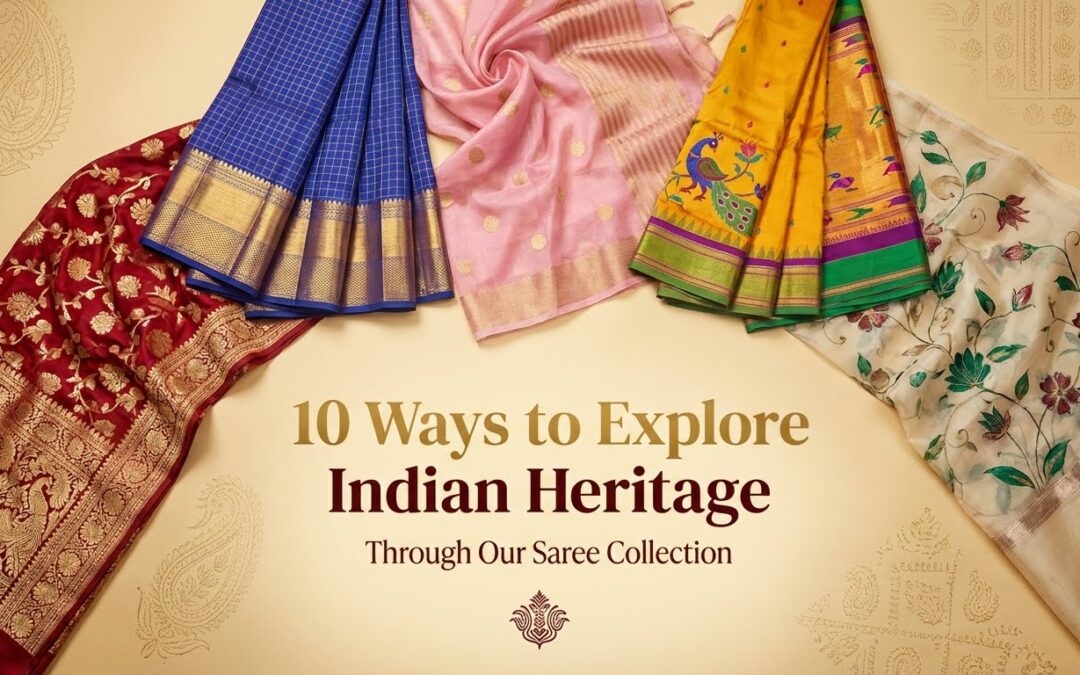
You can explore Indian heritage through sarees by discovering regional weaving techniques, understanding cultural motifs, learning about traditional craftsmanship, and experiencing the stories behind each drape. At Mahaveera Textiles, we offer authentic handloom and designer sarees that represent India’s rich textile legacy. Each piece in our collection connects you to centuries of tradition, from Kanjivaram silks to Banarasi brocades, making it easy to celebrate and preserve our cultural roots.
Introduction: Why Sarees Are More Than Just Clothing
When you wear a saree, you carry thousands of years of Indian culture on your shoulders. This six-yard wonder tells stories of ancient kingdoms, skilled artisans, and timeless traditions. At Mahaveera Textiles, located on M.C Road, Chennai, we believe that every saree is a gateway to explore Indian heritage saree collection that spans across all regions of our beautiful country.
For over decades, we have been helping women connect with their roots through our carefully curated saree collection. Our store is not just a place to shop. It is a cultural destination where you can touch, feel, and understand the soul of Indian textiles.
When you call us at 9841120762, you are not just calling a shop. You are reaching out to people who genuinely care about preserving and sharing the magic of Indian handlooms and designer sarees.
1. Discover Regional Weaving Techniques That Define India
India has 29 states, and each state has its own unique weaving style. When you explore Indian heritage saree collection at Mahaveera Textiles, you discover how different regions use different techniques to create magic with threads.
South Indian Weaving Excellence
In Tamil Nadu, we have the famous Kanjivaram sarees. These silk sarees are woven with pure mulberry silk and gold zari. The weaving technique used here is over 400 years old. When you hold a Kanjivaram saree from our collection, you hold a piece of Chola dynasty heritage.
Karnataka gives us the beautiful Mysore silk sarees. These sarees are lighter than Kanjivaram but equally stunning. The soft texture and subtle designs make them perfect for everyday elegance.
North Indian Textile Treasures
Banarasi sarees from Varanasi are world famous. The intricate brocade work takes weeks to complete. Our Banarasi collection at Mahaveera Textiles includes sarees that showcase Mughal-inspired floral and foliate motifs. Each piece reflects the craftsmanship that makes Varanasi a UNESCO Creative City of Music and Crafts.
Chanderi sarees from Madhya Pradesh are known for their sheer texture. The three-shaft looms used to weave these sarees create a fabric so light it feels like wearing air.
Eastern India’s Weaving Wonders
West Bengal produces the elegant Baluchari sarees. These sarees tell stories through woven images. You can see scenes from Ramayana and Mahabharata depicted on the pallu. When you explore Indian heritage saree collection from this region, you explore Indian mythology itself.
Assam’s Muga silk is exclusive to this region. The golden yellow natural fiber cannot be found anywhere else in the world. Our collection includes authentic Assamese sarees that represent the pride of Northeast India.
Western Region’s Vibrant Traditions
Gujarat brings us the colorful Patola sarees. The double ikat technique used here is so complex that only a few families in Patan still practice it. These sarees are reversible and incredibly durable.
At Mahaveera Textiles, we source directly from weavers across India. This ensures that when you explore Indian heritage saree collection with us, you get authentic pieces that support real artisan communities.
2. Understand the Cultural Significance of Colors and Motifs
Every color and design on a saree has meaning. This is what makes Indian textiles so special. When you explore Indian heritage saree collection, you learn a visual language that has been spoken for centuries.
The Language of Colors
Red sarees symbolize marriage and prosperity in most Indian cultures. This is why brides across India wear red or variations like maroon and pink. Our bridal collection at Mahaveera Textiles includes red sarees in various regional styles.
Yellow represents knowledge and learning. It is the color of spring and new beginnings. We have beautiful yellow silk sarees perfect for cultural ceremonies and festivals.
Green stands for fertility and new life. Our collection includes bottle green, emerald, and parrot green sarees that are popular during the monsoon wedding season.
White traditionally meant mourning in some communities, but times have changed. Today, white sarees with gold borders are considered elegant and sophisticated. We have a stunning collection of white and off-white sarees for modern women.
Decoding Traditional Motifs
The peacock motif appears frequently in South Indian sarees. This bird represents beauty and grace. It is also India’s national bird, making it a symbol of national pride.
The mango or paisley design originated in Persia but became quintessentially Indian. This teardrop shape represents fertility and life. You will find paisley patterns across many sarees at Mahaveera Textiles.
Temple border designs come from temple architecture. The gopuram (temple tower) shapes carved into zari borders connect the saree to India’s spiritual heritage. When you wear a saree with temple borders, you carry a piece of devotional art.
Floral motifs like jasmine, lotus, and rose appear in different regional styles. Each flower has symbolic meaning rooted in ancient texts and practices.
At Mahaveera Textiles on M.C Road, Chennai, our staff can explain the meaning behind every motif on our sarees. Call us at 9841120762 to book a personalized consultation where we help you explore Indian heritage saree collection through its symbolic language.
3. Experience Traditional Craftsmanship and Artisan Skills
Behind every saree is an artisan who learned their craft from their parents and grandparents. When you explore Indian heritage saree collection, you honor these skilled craftspeople who keep traditions alive.
The Art of Handloom Weaving
Handloom sarees are woven on manual looms without electricity. A single saree can take days, weeks, or even months to complete. The weaver sits at the loom for hours, creating intricate patterns from memory.
At Mahaveera Textiles, we work directly with handloom cooperatives. This ensures fair wages for weavers and authentic products for our customers. When you buy from us, you support families who depend on this traditional occupation.
Zari Work and Embellishment Techniques
Real zari is made from silver threads coated with gold. This creates the rich, luxurious look that makes Indian sarees famous worldwide. Cheaper alternatives use copper or synthetic threads, but we maintain quality standards at Mahaveera Textiles.
The technique of adding zari to silk requires great skill. The weaver must maintain consistent tension while incorporating metal threads into silk. This prevents puckering and ensures the saree drapes beautifully.
Block Printing and Natural Dyes
Some sarees in our collection feature block printing. Artisans carve designs into wooden blocks and stamp them onto fabric using natural dyes. This age-old technique creates unique patterns that cannot be exactly replicated.
Natural dyes from plants, minerals, and insects create colors that age gracefully. Unlike chemical dyes that fade quickly, naturally dyed fabrics develop character over time. We have a special section for naturally dyed sarees at our Chennai store.
Embroidery Traditions
Different regions have different embroidery styles. Kashmiri sarees feature sozni embroidery with fine needlework. Lucknowi chikankari uses white thread on pastel fabrics for a delicate look. Kantha embroidery from Bengal creates stunning patterns with simple running stitches.
When you explore Indian heritage saree collection at Mahaveera Textiles, you explore these diverse embroidery traditions. Each technique represents a different regional aesthetic and cultural practice.
4. Connect With Ancient Textile Trade Routes
Indian textiles traveled the world for thousands of years. The famous Silk Road connected India to China, Persia, and Europe. When you explore Indian heritage saree collection, you connect with this global history.
India’s Role in the Global Textile Trade
Roman historians wrote about Indian muslin being so fine that entire sarees could pass through a wedding ring. These “woven winds” were highly prized in ancient Rome and Egypt.
During the medieval period, Indian textiles were currency. Merchants traded Indian cotton and silk for spices, gold, and precious stones. The wealth generated from textiles built kingdoms and funded artistic movements.
The Chola dynasty had strong trade connections with Southeast Asia. They exported fine silks that influenced textile traditions in Thailand, Cambodia, and Indonesia. Today, you can still see the influence of Indian weaving in these countries.
Colonial Impact and Revival
The British colonial period severely damaged India’s textile industry. Handloom weavers suffered when cheap machine-made fabrics flooded Indian markets. Many traditional weaving communities faced economic collapse.
The Independence movement led by Mahatma Gandhi placed khadi and handloom at its center. Wearing handloom became an act of patriotism and resistance. This movement saved many weaving traditions from extinction.
Today, at Mahaveera Textiles, we continue this legacy. By promoting handloom sarees, we ensure that traditional weaving communities survive and thrive. When you explore Indian heritage saree collection with us, you participate in this revival movement.
5. Learn About Festival and Ceremony Traditions
Different occasions call for different sarees. Understanding this helps you explore Indian heritage saree collection with cultural awareness and appreciation.
Wedding Sarees Across India
Tamil weddings feature brides in Kanjivaram silk with gold zari work. The heavier the saree, the more auspicious it is considered. We have an exclusive bridal collection at Mahaveera Textiles that includes traditional wedding sarees from across India.
Bengali brides wear red Banarasi sarees with intricate patterns. The combination of red fabric and gold zari creates a stunning bridal look that photographs beautifully.
Gujarati brides prefer sarees with bandhani work. The tie-dye technique creates small dots in colorful patterns. Some communities also wear gharchola sarees with traditional checked patterns.
Festival Sarees
Pongal and Sankranti call for traditional cotton sarees with bright colors and simple borders. These represent gratitude for the harvest and connection to agricultural roots.
Diwali celebrations feature silk sarees in jewel tones. Reds, greens, blues, and purples dominate during this festival of lights. Our Diwali collection at Mahaveera Textiles goes live every September.
Navratri sees women wearing different colored sarees for nine nights. Each color has specific significance according to the goddess being worshipped that day.
Ceremony Specific Draping
Different ceremonies require different draping styles. The Maharashtrian nauvari style uses nine yards of fabric and allows free movement. The Bengali style with pleats on the side creates an elegant silhouette.
At our store on M.C Road, Chennai, we offer draping services and tutorials. Our experienced staff can teach you traditional draping methods when you explore Indian heritage saree collection with us. Just call 9841120762 to schedule an appointment.
6. Appreciate the Evolution of Saree Designs
Indian sarees have evolved while maintaining their traditional essence. When you explore Indian heritage saree collection at Mahaveera Textiles, you see how ancient designs meet modern sensibilities.
Traditional Designs That Never Go Out of Style
The classic temple border design has remained popular for over 500 years. These borders featuring architectural elements frame the saree beautifully and add structure to the drape.
Checks and stripes in cotton sarees represent timeless simplicity. These geometric patterns have been woven for centuries and remain fashionable today.
The traditional pallu with elaborate designs continues to be the focal point of most sarees. Whether it features peacocks, elephants, or floral motifs, the pallu tells the saree’s story.
Contemporary Innovations
Modern designers have introduced new color combinations while respecting traditional weaving techniques. Pastel Kanjivarams and mint green Banarasis show how tradition adapts to current fashion trends.
Fusion sarees blend different regional styles. A Banarasi saree with Kanjivaram borders or a Kerala kasavu with Bengali kantha embroidery represents cultural exchange within India.
Lightweight silk sarees cater to women who want traditional looks without heavy fabrics. These innovations make sarees more practical for daily wear and travel.
At Mahaveera Textiles, our collection includes both traditional and contemporary designs. This allows you to explore Indian heritage saree collection across time periods and design philosophies.
7. Understand the Environmental and Ethical Benefits
Choosing traditional sarees supports sustainable fashion and ethical business practices. When you explore Indian heritage saree collection, you make choices that benefit people and the planet.
Handloom Sarees Are Eco-Friendly
Handloom weaving uses no electricity. The entire process relies on human skill and manual looms. This creates zero carbon footprint during the weaving process.
Natural fibers like silk and cotton are biodegradable. Unlike synthetic sarees that sit in landfills for decades, traditional sarees return to the earth naturally.
Natural dyes from plants and minerals do not pollute water sources. Chemical dyes used in power loom factories cause severe environmental damage. By choosing naturally dyed sarees from Mahaveera Textiles, you protect India’s rivers and groundwater.
Supporting Artisan Livelihoods
When you buy handloom sarees, you directly support weaving families. These artisans earn fair wages and maintain dignified employment that respects their skills.
Many weaving communities face extinction as younger generations move to cities for work. By creating demand for handloom products, we help preserve these communities. At Mahaveera Textiles, we partner with weaver cooperatives to ensure sustainable livelihoods.
Sarees as Long-Term Investments
A well-made silk saree lasts for decades. Many families pass down wedding sarees through generations. This contrasts sharply with fast fashion items that are discarded after a few wears.
The cost per wear of a quality saree becomes very low over time. When you explore Indian heritage saree collection with long-term thinking, you save money and reduce waste.
Visit us at M.C Road, Chennai, or call 9841120762 to learn more about our sustainability practices and ethical sourcing.
8. Discover Personal Style Through Traditional Clothing
Finding your personal style through sarees helps you connect with heritage while expressing individuality. When you explore Indian heritage saree collection, you discover which styles resonate with your personality.
Understanding Body Types and Draping Styles
Different saree fabrics and draping styles suit different body types. Lightweight cotton and chiffon sarees create flowing silhouettes that suit taller women. Heavier silks add structure and suit petite frames well.
The way you drape affects your overall look. The Gujarati style with pleats in front creates vertical lines that elongate the body. The Bengali style with pleats on the side creates graceful curves.
At Mahaveera Textiles, our staff provides personalized styling advice. We help you understand which sarees from our collection will make you look and feel your best.
Color Selection Based on Skin Tone
Indian skin tones range from very fair to deep brown. Every shade looks beautiful in the right colors. Understanding your undertones helps you choose sarees that enhance your natural beauty.
Warm undertones look stunning in reds, oranges, yellows, and earthy colors. Cool undertones shine in blues, purples, pinks, and jewel tones.
Our collection includes sarees in every color imaginable. When you explore Indian heritage saree collection with us, we help you find colors that make you glow.
Occasion-Based Selection
Daily wear sarees should be comfortable and easy to maintain. Cotton and light silk sarees work well for office wear and casual occasions.
Special occasions call for heavier silks with elaborate designs. These make statement pieces for weddings, festivals, and formal events.
Travel-friendly sarees in wrinkle-resistant fabrics suit modern lifestyles. We have a special section for these practical yet traditional sarees.
9. Learn Proper Saree Care and Maintenance
Preserving sarees ensures they last for generations. When you explore Indian heritage saree collection, learning proper care becomes essential.
Storing Silk Sarees
Silk sarees should be wrapped in muslin or cotton cloth. Plastic covers trap moisture and damage silk fibers over time.
Store sarees in a cool, dry place away from direct sunlight. Sunlight fades colors and weakens fibers.
Refold sarees every few months along different lines. This prevents permanent creases and maintains fabric integrity.
Add neem leaves or cloves to your saree storage. These natural ingredients prevent insect damage without using harsh chemicals.
Washing and Cleaning
Most silk sarees need dry cleaning. However, some cotton sarees can be hand washed in cold water with mild detergent.
Never wring or twist silk sarees. Gently press out water between towels and dry in shade.
Zari work requires special attention. Keep zari areas away from water when possible. If washing is necessary, use very gentle methods.
At Mahaveera Textiles, we provide care instructions specific to each saree type. Our staff educates customers about proper maintenance when you purchase from us.
Dealing with Stains and Damage
Fresh stains should be blotted, not rubbed. Rubbing spreads stains and damages fibers.
Professional cleaners experienced with traditional textiles should handle tough stains on valuable sarees.
Small tears in silk can be rewoven by skilled artisans. We can connect you with experts who specialize in saree restoration.
Passing down sarees creates family legacy and cultural continuity. When you explore Indian heritage saree collection with this intention, you become a custodian of culture.
Creating Family Heirlooms
Wedding sarees make excellent heirlooms. The emotional and cultural value increases with each generation that wears them.
Document the stories behind special sarees. Write down when and where they were purchased, who wore them for what occasion, and any special memories associated with them.
Teach younger family members about saree history and significance. This knowledge makes them appreciate the garments beyond their monetary value.
Introducing Children to Cultural Heritage
Let children touch and feel different saree fabrics. This sensory experience creates early connections to textile traditions.
Explain the stories behind motifs and colors in age-appropriate ways. This turns sarees into storytelling tools that teach culture and history.
Include teenagers in saree shopping trips. When they explore Indian heritage saree collection with you at Mahaveera Textiles, they learn to appreciate quality and craftsmanship.
Modern Ways to Wear Tradition
Young women can style sarees in contemporary ways. Pairing traditional sarees with modern blouses creates fusion looks that feel fresh and relevant.
Converting sarees into other garments when they can no longer be worn extends their life. Lehenga skirts, dupattas, and even cushion covers can be made from old sarees.
Photographing yourself in family heirloom sarees creates visual records for future generations. These photos document both fashion evolution and family history.
At Mahaveera Textiles on M.C Road, Chennai, we welcome families exploring heritage together. Call us at 9841120762 to plan a family visit where multiple generations can explore Indian heritage saree collection.
Why Choose Mahaveera Textiles for Your Heritage Saree Journey
At Mahaveera Textiles, we are not just selling sarees. We are sharing a passion for Indian culture and textile heritage. Our location on M.C Road in Chennai has been serving saree lovers for years, building trust through authentic products and genuine service.
Our Commitment to Authenticity
Every saree in our collection is carefully sourced and verified for authenticity. We work directly with weavers and cooperatives to ensure you get genuine handloom products.
We never misrepresent power loom sarees as handloom. Our transparent approach means you always know exactly what you are buying.
Personalized Service That Makes a Difference
When you visit our store or call us at 9841120762, you experience personalized attention. We take time to understand your needs, preferences, and budget.
Our staff includes textile experts who can answer detailed questions about weaving techniques, care instructions, and styling options.
We offer customization services for blouses and alterations to ensure perfect fit and finish.
A Collection That Spans India
Our inventory includes sarees from every major weaving region in India. When you explore Indian heritage saree collection at Mahaveera Textiles, you explore the entire country’s textile traditions in one place.
From daily wear cotton sarees to grand bridal silks, we have options for every occasion and budget.
We regularly update our collection with new arrivals, seasonal collections, and exclusive pieces that you cannot find elsewhere.
Building Relationships Beyond Transactions
We view our customers as family. Many clients have been shopping with us for decades, returning for every major life event.
We remember your preferences, follow up on special orders, and genuinely care about your satisfaction.
Our goal is to make sure that when you explore Indian heritage saree collection with us, you have an experience that connects you deeply to your cultural roots.
Conclusion: Your Journey to Explore Indian Heritage Saree Collection Starts Here
Indian sarees are more than fabric and thread. They are living traditions that connect us to our ancestors, our land, and our shared cultural identity. Every saree tells a story of skill, dedication, and artistic vision.
When you explore Indian heritage saree collection at Mahaveera Textiles, you embark on a journey through India’s diverse regions, ancient crafts, and timeless aesthetics. You support artisan communities, promote sustainable fashion, and preserve cultural knowledge for future generations.
Whether you are buying your first saree or adding to a cherished collection, we invite you to visit us at M.C Road, Chennai. Walk through our store, touch the fabrics, and let us share the stories behind each piece.
Cannot visit in person? Call us at 9841120762. Our team provides detailed information, sends photos and videos of sarees, and ships carefully packaged orders across India.
Your heritage is waiting to be discovered, one beautiful saree at a time. Let Mahaveera Textiles be your guide as you explore Indian heritage saree collection and find pieces that speak to your heart and honor your roots.
Frequently Asked Questions
What makes a saree authentic handloom?
Authentic handloom sarees are woven on manual looms without electricity. Look for slight irregularities in weave, which indicate human craftsmanship. The selvage (edge) of handloom sarees shows individual warp threads. At Mahaveera Textiles, we provide certificates of authenticity with all handloom purchases and can explain specific identification features for each regional style when you explore Indian heritage saree collection with us.
How do I choose the right saree for my first purchase?
For first-time buyers, we recommend starting with a medium-weight silk or cotton saree in a color you love. Avoid very heavy sarees or complex draping styles initially. Visit Mahaveera Textiles on M.C Road, Chennai, or call 9841120762 for personalized guidance. Our staff helps beginners explore Indian heritage saree collection by suggesting versatile pieces suitable for multiple occasions.
What is the difference between Kanjivaram and Banarasi sarees?
Kanjivaram sarees from Tamil Nadu are woven with thicker silk threads and feature temple-inspired motifs with contrasting borders. Banarasi sarees from Varanasi use finer silk with intricate brocade work showing Mughal influence. Kanjivaram sarees are generally heavier and more structured, while Banarasi sarees have a softer drape. Both are excellent investments when you explore Indian heritage saree collection at Mahaveera Textiles.
How much should I budget for a quality silk saree?
Quality handloom silk sarees start from approximately ₹5,000 and can go up to several lakhs depending on the intricacy of work, amount of zari, and rarity of technique. At Mahaveera Textiles, we maintain transparent pricing and offer sarees across all budget ranges. Whether you are looking for daily wear or bridal silk, you will find options when you explore Indian heritage saree collection with us.
Can silk sarees be worn in hot weather?
Yes, pure silk is breathable and comfortable even in warm climates. The natural fiber regulates temperature better than synthetic materials. Lighter silk varieties like Chanderi and Mysore silk are especially suitable for hot weather. At Mahaveera Textiles, we help you select appropriate silk weights for Chennai’s climate when you explore Indian heritage saree collection for summer wear.
How often should I dry clean my silk sarees?
Dry clean silk sarees only when necessary, as frequent cleaning can damage fibers. If a saree is not stained or odorous, airing it out after wearing is sufficient. For sarees with heavy zari work, professional cleaning once every few years is adequate with proper storage. When you explore Indian heritage saree collection at Mahaveera Textiles, we provide detailed care instructions specific to each saree type.
What is the significance of the pallu design?
The pallu is the decorative end piece of a saree that drapes over the shoulder. This section traditionally features the most elaborate designs and tells the saree’s story. Different regions have distinct pallu styles—Kanjivaram pallus feature large motifs, while Banarasi pallus display intricate brocade patterns. Understanding pallu designs helps you explore Indian heritage saree collection more meaningfully.
Are handloom sarees worth the investment compared to power loom sarees?
Yes, handloom sarees are excellent investments. They last longer, retain value better, and support artisan communities. The uniqueness of handloom means no two sarees are identical. Power loom sarees are more affordable but lack the character and durability of handloom. At Mahaveera Textiles, we stock both options and help you make informed choices when you explore Indian heritage saree collection based on your needs and values.
Can I convert an old silk saree into something else?
Yes, old silk sarees can be repurposed into lehenga skirts, dupattas, blouses, cushion covers, wall hangings, and more. This extends the saree’s life and keeps the fabric in use. Many families create quilts from multiple old sarees as memory pieces. At Mahaveera Textiles, we can recommend skilled tailors who specialize in saree conversion projects.
How do I verify if the zari is real gold?
Real zari is made from silver threads coated with gold. To test, burn a small thread from the border—real zari produces ash and smells like burnt fabric, while imitation zari melts and smells like plastic. Real zari also feels cooler to touch and has more weight. At Mahaveera Textiles, we clearly label zari types and never misrepresent materials. When you explore Indian heritage saree collection with us, you get complete transparency about materials used.
What are the trending saree colors for this season?
While trends change seasonally, classic colors like reds, greens, blues, and gold remain timeless. Currently, pastels and earthy tones are popular for summer, while jewel tones dominate festive seasons. Visit Mahaveera Textiles on M.C Road or call 9841120762 to see our latest seasonal collections and trending colors when you explore Indian heritage saree collection with current fashion sensibilities.
How do regional draping styles differ across India?
India has over 80 documented draping styles. The Nivi style from Andhra Pradesh is most common, with pleats in front and pallu over the shoulder. Bengali style features pleats on the left side without pins. Maharashtrian nauvari uses nine yards with pleats that resemble trousers. Gujarati style brings the pallu from back to front over the right shoulder. At Mahaveera Textiles, we can demonstrate different draping methods and recommend sarees suitable for specific styles when you explore Indian heritage saree collection.