
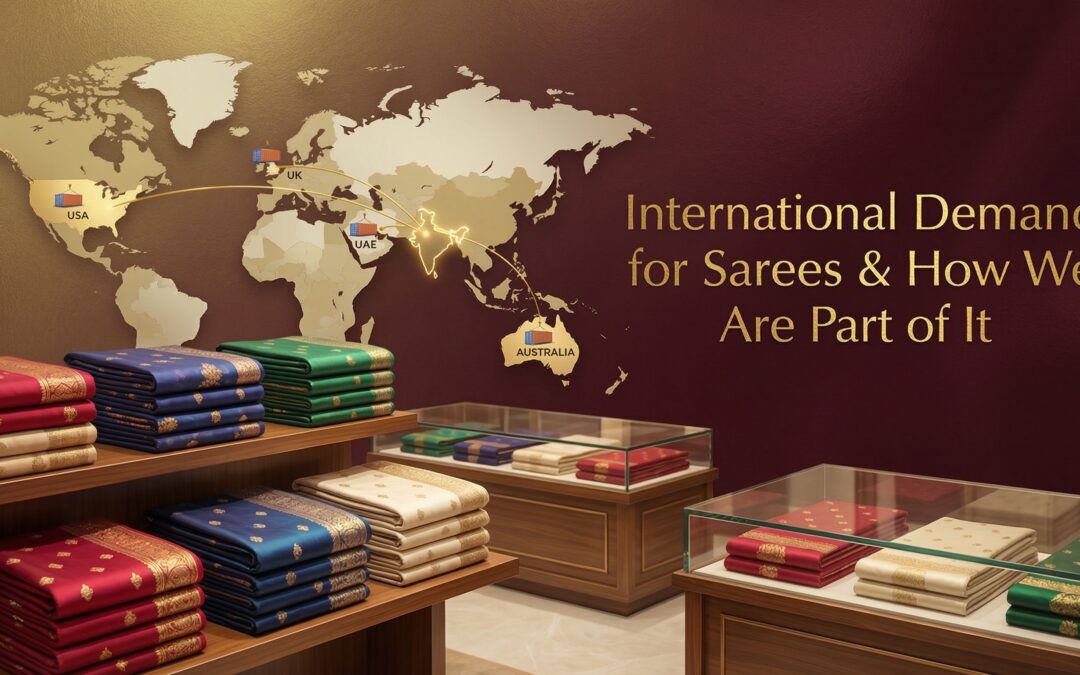
International demand for sarees has grown significantly as global fashion embraces ethnic wear, with markets in the USA, UK, Canada, Australia, and Middle East showing strong interest. Indian diaspora communities drive core demand while non-Indian buyers increasingly appreciate sarees for their elegance, versatility, and cultural richness. Online platforms, social media influence, Bollywood’s global reach, and fusion fashion trends have made sarees accessible worldwide. Businesses like Mahaveera Textiles participate in this global movement by offering authentic designs, international shipping, quality assurance, and cultural education that helps buyers worldwide connect with traditional Indian textiles.
Contents
- 1 Introduction
- 2 Understanding International Demand for Sarees
- 3 Key International Markets Driving Saree Demand
- 4 Factors Driving International Demand for Sarees
- 5 How Mahaveera Textiles Serves International Demand for Sarees
- 6 Design Preferences in International Markets
- 7 Challenges in Meeting International Demand for Sarees
- 8 Future Trends in International Demand for Sarees
- 9 Cultural Responsibility in International Saree Markets
- 10 Frequently Asked Questions
- 11 Conclusion
Introduction
Mahaveera Textiles has been serving saree enthusiasts not just in Chennai but increasingly across international borders, as traditional Indian garments find new audiences worldwide. The international demand for sarees represents one of the most exciting developments in ethnic fashion, with buyers from diverse cultural backgrounds discovering the beauty, elegance, and versatility of this six-yard wonder. Understanding this global trend helps us appreciate how traditional crafts adapt to modern markets while maintaining their cultural authenticity.
For customers exploring sarees, knowing about international demand for sarees reveals important insights about quality standards, design preferences, and evolving fashion sensibilities. What was once primarily worn within South Asian communities has become a statement piece in global wardrobes. This transformation reflects changing attitudes toward cultural fashion, increased connectivity through digital platforms, and growing appreciation for handcrafted textiles worldwide.
The international demand for sarees also validates the craftsmanship and artistic heritage that Indian weavers have preserved for centuries. When sarees appear on international runways, in global fashion magazines, or at prestigious events worldwide, they carry forward the legacy of countless artisans. Mahaveera Textiles takes pride in being part of this global journey, connecting traditional Indian textiles with appreciative audiences across continents. This guide explores how and why international markets embrace sarees, what drives this demand, and how businesses participate in this cultural exchange.
Understanding International Demand for Sarees
The growing international demand for sarees marks a significant shift in global fashion consumption patterns. What began as ethnic wear primarily for diaspora communities has evolved into a genuine fashion trend embraced by diverse populations. This transformation reflects several interconnected factors including globalization, digital connectivity, cultural curiosity, and the universal appeal of quality craftsmanship.
Historical context helps explain current trends. Indian diaspora communities established in countries like the UK, USA, Canada, Australia, and Singapore created initial markets for sarees abroad. These communities maintained cultural traditions, with sarees remaining essential for weddings, festivals, and religious ceremonies. First and second-generation immigrants sought authentic pieces that connected them to their heritage, creating steady demand that encouraged retailers to establish international supply chains.
However, the international demand for sarees has expanded far beyond diaspora markets. Non-Indian buyers increasingly appreciate sarees for their aesthetic qualities, versatility, and the stories they carry. Fashion-conscious consumers worldwide seek unique pieces that stand out from mass-produced Western clothing. Sarees offer exactly this distinctiveness—each piece tells a story through its patterns, colors, and weaving techniques.
Mahaveera Textiles has witnessed this evolution firsthand through increasing inquiries from international buyers seeking authentic Indian textiles. The questions these customers ask reveal deep interest in understanding saree origins, appropriate wearing occasions, and care requirements. This curiosity goes beyond superficial fashion interest to genuine appreciation for cultural textiles. Serving international customers requires not just selling products but providing education about traditions, craftsmanship, and proper usage.
Economic factors also drive international interest. As global middle classes expand, particularly in emerging markets, disposable income for luxury and semi-luxury items increases. Sarees positioned as artisan products or designer wear appeal to consumers seeking quality over quantity. The price points of handloom silks and designer sarees align with global luxury fashion pricing, making them accessible to international buyers who value craftsmanship and exclusivity.
Key International Markets Driving Saree Demand
Different regions show varying patterns in how international demand for sarees manifests. Understanding these regional preferences helps businesses like Mahaveera Textiles tailor their offerings appropriately.
North America
The United States and Canada represent major markets with substantial South Asian populations concentrated in cities like New York, Toronto, Vancouver, and San Francisco. The international demand for sarees in North America combines diaspora needs with growing mainstream interest. Indian-American and Indo-Canadian communities maintain strong cultural connections, regularly purchasing sarees for weddings, Diwali, Navratri, and other celebrations.
Mainstream American interest in sarees has increased through several channels. Bollywood’s growing presence in American entertainment introduces sarees to wider audiences. Fashion bloggers and influencers showcase saree styling, making the garment more accessible to non-Indian followers. University campuses with diverse student populations see increased saree wearing during cultural events and festivals, normalizing the garment in everyday fashion conversations.
Mahaveera Textiles ships to numerous North American destinations, observing preferences for lighter silks, contemporary designs, and fusion styles that accommodate Western styling sensibilities. American buyers particularly appreciate detailed product information, size guides, and styling suggestions that help them navigate saree wearing with confidence.
United Kingdom and Europe
The UK hosts one of the largest South Asian populations outside India, with significant communities in London, Birmingham, Leicester, and Manchester. The international demand for sarees in Britain reflects deep historical connections between the countries. British-Indian communities maintain strong cultural practices, with sarees remaining central to their fashion identity.
European markets beyond the UK show growing interest, particularly in fashion-forward cities like Paris, Milan, and Berlin. European buyers often approach sarees as artistic textile pieces, appreciating the craftsmanship and cultural heritage they represent. Fashion weeks in European capitals increasingly feature Indian designers, introducing sarees to European audiences who value sustainable, artisan-made clothing.
The European market tends toward classic silk sarees, handloom pieces with visible craftsmanship, and designer interpretations that blend traditional and contemporary elements. Buyers appreciate detailed information about weaving techniques, fiber sources, and artisan communities behind products, reflecting European consumer interest in ethical fashion and supply chain transparency.
Middle East
Gulf countries including UAE, Saudi Arabia, Qatar, and Kuwait show strong international demand for sarees driven by large expatriate Indian populations working in these regions. Dubai particularly functions as a major hub for saree retail, with shops catering to diverse South Asian communities. The climate influences preferences toward lighter fabrics and breathable materials suitable for hot weather.
Middle Eastern fashion also shows indigenous interest in sarees as luxury garments. Wealthy local populations appreciate the elaborate embellishments, rich fabrics, and ceremonial elegance that characterize premium sarees. The cultural emphasis on modesty and covered dressing makes sarees naturally compatible with regional values, facilitating adoption beyond South Asian communities.
Mahaveera Textiles serves Middle Eastern customers who often seek heavily embellished bridal sarees, designer pieces with elaborate work, and classic Kanjivaram or Banarasi silks that convey luxury and status. The regional preference for opulence aligns well with traditional Indian textile aesthetics, creating natural market compatibility.
Australia and New Zealand
Australian cities like Sydney, Melbourne, and Perth host significant South Asian communities contributing to international demand for sarees. The multicultural character of Australian society creates openness to diverse fashion forms, with sarees appearing at weddings, cultural festivals, and increasingly in mainstream fashion contexts.
Australian buyers show preferences for comfortable cotton sarees suitable for warm climates, alongside silk pieces for special occasions. The emphasis on casual, outdoor lifestyles influences styling, with sarees often worn in more relaxed draping styles. Educational content about saree wearing proves particularly valuable for Australian customers, as many learn saree draping as adults when exploring their cultural heritage.
Southeast Asia
Countries like Singapore, Malaysia, and Thailand with substantial Indian populations contribute significantly to international demand for sarees. Singapore particularly functions as a regional fashion hub where traditional and contemporary Indian fashion intersect. These markets show sophisticated understanding of saree types, regional variations, and quality markers.
Southeast Asian buyers frequently seek specific regional styles—Kanjivaram silks, Bengali tant sarees, Kerala kasavu—reflecting the diverse Indian regional origins of local communities. The tropical climate favors cotton and lightweight silks, with breathability and comfort being key purchase considerations. Mahaveera Textiles finds Southeast Asian customers particularly knowledgeable about saree varieties and quality assessment, making interactions educational and enjoyable.
Factors Driving International Demand for Sarees
Multiple interconnected factors explain why international demand for sarees continues growing across diverse markets and demographics.
Digital Connectivity and E-commerce
Online shopping platforms have revolutionized how international customers access Indian textiles. Previously, buying authentic sarees required visiting India or relying on limited local retailers. Today, dedicated saree e-commerce sites, general marketplaces, and social media shopping enable worldwide access. Mahaveera Textiles leverages digital platforms to reach customers globally, providing detailed product photography, measurements, and descriptions that help remote buyers make confident decisions.
Social media particularly drives international awareness and desire. Instagram and Pinterest showcase endless saree styling possibilities, from traditional draping to contemporary fusion looks. Fashion influencers, both Indian and international, regularly feature sarees, introducing them to followers who might never have considered wearing one. The visual nature of these platforms perfectly suits sarees, whose beauty photographs exceptionally well.
Virtual consultations and video calls allow international customers to examine sarees before purchase, bridging the gap between online browsing and in-person shopping. Mahaveera Textiles offers personalized assistance to international buyers, showing saree details via video, answering questions about fabric and drape, and suggesting appropriate pieces based on stated needs and occasions.
Bollywood and Entertainment Influence
Bollywood’s global reach significantly contributes to international demand for sarees. Indian films reach audiences worldwide, particularly in regions with South Asian populations but increasingly beyond. When popular actresses wear stunning sarees in films and at events, viewers notice. The glamorous presentation of sarees in cinema creates aspirational desire among international audiences.
Streaming platforms like Netflix, Amazon Prime, and Disney+ make Indian content accessible globally, exposing new audiences to Indian fashion. Shows and films featuring sarees introduce the garment’s elegance and versatility to viewers unfamiliar with South Asian clothing. This exposure often translates into purchase interest, with people seeking similar styles they admired on screen.
Celebrity endorsements and red carpet appearances further fuel international interest. When Indian celebrities attend international events in sarees or when non-Indian celebrities experiment with saree styling, media coverage spreads awareness. These high-profile appearances validate sarees as legitimate fashion choices in global contexts, encouraging experimentation among fashion-conscious international consumers.
Sustainable and Ethical Fashion Movement
Growing global concern about fast fashion’s environmental and social impacts drives consumers toward sustainable alternatives. Handloom sarees perfectly align with sustainable fashion values—they represent artisan craftsmanship, use natural fibers, support traditional communities, and often involve eco-friendly production methods. This alignment makes sarees attractive to environmentally conscious international buyers seeking ethical clothing options.
The story behind handloom sarees resonates with consumers who value transparency and authenticity. Knowing that a saree was hand-woven by skilled artisans using traditional techniques appeals to buyers tired of anonymous mass production. Mahaveera Textiles emphasizes these aspects when serving international customers, explaining weaving communities, traditional techniques, and the cultural significance embedded in each piece.
Quality and longevity also matter to sustainability-minded buyers. Well-made sarees last decades with proper care, contrasting sharply with disposable fast fashion. International customers increasingly appreciate garments that become long-term wardrobe investments rather than seasonal purchases. Premium silk sarees and quality handloom pieces fit this criterion perfectly, justifying higher price points through durability and timeless appeal.
Cultural Appreciation and Fusion Fashion
Increasing cultural openness and appreciation drive international demand for sarees among non-South Asian populations. Modern consumers, particularly younger generations, embrace cultural diversity in fashion rather than viewing clothing through rigid cultural boundaries. This openness creates space for sarees in global wardrobes, worn respectfully by people appreciating their beauty and craftsmanship.
Fusion fashion trends particularly facilitate this crossover. Contemporary designers create saree variations that blend Indian and Western elements—pre-stitched sarees with belts, saree gowns, dhoti-style draping, and sarees paired with crop tops or jackets. These innovations make sarees more accessible to international buyers unfamiliar with traditional draping while maintaining the garment’s essential character.
Fashion education through blogs, videos, and social media helps international buyers understand appropriate saree wearing. Content explaining saree types, occasions, draping methods, and cultural significance empowers buyers to engage respectfully with the garment. Mahaveera Textiles contributes to this education through detailed product descriptions and responsive customer service that addresses cultural questions alongside practical ones.
Wedding and Event Fashion
Destination weddings and multicultural celebrations drive significant international demand for sarees. When international friends attend Indian weddings or when couples plan fusion ceremonies, sarees become essential wardrobe items. The desire to dress appropriately and celebrate cultural traditions motivates saree purchases among diverse populations.
Event fashion more broadly embraces sarees for their dramatic elegance. Formal events, galas, and parties welcome distinctive fashion choices, and sarees certainly deliver distinctiveness. International buyers seeking standout pieces for special occasions increasingly consider sarees alongside Western evening wear. The elaborate embellishments, rich fabrics, and inherent glamour of dressy sarees compete effectively with ball gowns and cocktail dresses.
Bridesmaids’ sarees represent another growing segment. Multicultural weddings often feature bridesmaids in coordinated sarees, creating visual unity while honoring cultural traditions. This trend requires retailers to supply multiple sarees in coordinating colors and styles—a service Mahaveera Textiles provides through curated bridal party collections suitable for diverse international events.
How Mahaveera Textiles Serves International Demand for Sarees
Meeting international customer needs requires more than shipping products abroad. Mahaveera Textiles has developed comprehensive approaches to serve global markets effectively while maintaining quality and authenticity.
Authentic Quality and Regional Specialties
International buyers often seek authentic pieces that truly represent Indian textile traditions. Mahaveera Textiles maintains relationships with weaving communities across India, sourcing genuine Kanjivaram silks from Tamil Nadu, Banarasi sarees from Varanasi, Bengali cottons from West Bengal, and other regional specialties. This authenticity matters deeply to customers seeking legitimate traditional textiles rather than mass-produced imitations.
Quality assurance becomes even more critical for international sales where returns prove logistically challenging. Every saree undergoes thorough inspection before dispatch, checking for weaving defects, color consistency, and finishing quality. This quality control protects customer satisfaction and builds trust essential for sustained international business.
Detailed product information helps international buyers make informed decisions. Specifications include exact fabric content, dimensions, care instructions, and origin information. Photographs show sarees from multiple angles, capturing border details, pallu designs, and overall appearance. This transparency reduces uncertainty inherent in remote purchasing and demonstrates commitment to customer satisfaction.
International Shipping and Logistics
Reliable international shipping proves essential for serving global markets. Mahaveera Textiles partners with established courier services offering tracking, insurance, and reasonable delivery timeframes. Understanding customs requirements for different countries ensures smooth delivery without unexpected delays or additional charges.
Packaging protects sarees during international transit while presenting products attractively upon arrival. Sarees are folded carefully, wrapped in protective materials, and boxed securely to prevent damage. The unboxing experience matters to customers making significant purchases sight unseen, so presentation receives careful attention.
Clear communication about shipping costs, delivery times, and customs responsibilities sets appropriate expectations. International customers appreciate transparency about total costs and realistic timeframes rather than surprises after purchase. Mahaveera Textiles provides this information upfront, building trust and preventing disappointment.
Customer Education and Support
International customers often need guidance beyond basic product selection. Questions about appropriate occasions, draping methods, styling suggestions, and care instructions come regularly. Mahaveera Textiles provides responsive support through multiple channels—email, WhatsApp, video calls—ensuring customers receive help regardless of time zones or communication preferences.
Educational content addresses common questions proactively. Detailed care instructions accompany each saree, explaining washing, storage, and maintenance appropriate for specific fabrics. Styling suggestions help customers visualize wearing sarees in various contexts, building confidence in their purchases.
Cultural sensitivity matters when serving diverse international audiences. Some buyers come from South Asian backgrounds deeply familiar with sarees, while others approach them as beautiful foreign textiles. Communication adapts to each customer’s knowledge level, providing information without condescension or assumptions about prior experience.
Customization and Special Requests
International customers sometimes seek specific customizations—particular color combinations, border modifications, or blouse designs. When feasible, Mahaveera Textiles accommodates these requests, working with artisan partners to create personalized pieces. Custom orders require clear communication, realistic timeframes, and mutual understanding of expectations, but they create exceptional value for customers seeking unique sarees.
Bridal customers particularly appreciate customization options. Destination brides planning weddings that incorporate Indian traditions often need multiple coordinated sarees for various ceremonies. Providing consultation, color matching, and ensemble coordination helps these customers navigate complex requirements confidently.
Gift services address another international need. Customers purchasing sarees as gifts for overseas friends or family appreciate professional wrapping, gift messages, and direct shipping to recipients. These services transform sarees into thoughtful presents that carry personal meaning across distances.
Building Long-term Relationships
The most successful international business relies on repeat customers and referrals. Mahaveera Textiles focuses on creating positive experiences that encourage ongoing relationships. Following up after purchases to ensure satisfaction, addressing any concerns promptly, and maintaining contact through newsletters about new collections builds customer loyalty.
Understanding individual preferences enables personalized service. When customers return for additional purchases, previous buying history informs suggestions and recommendations. This personalized approach creates connections that transcend transactional relationships, turning customers into advocates who recommend Mahaveera Textiles within their networks.
Participation in international events, fashion shows, and cultural celebrations raises visibility in key markets. When possible, Mahaveera Textiles engages with overseas communities through sponsored events, collaborations with cultural organizations, or participation in Indian festivals abroad. These activities build brand recognition and demonstrate commitment to serving international audiences meaningfully.
Design Preferences in International Markets
International demand for sarees shows distinct design preferences that differ somewhat from domestic Indian markets. Understanding these preferences helps businesses like Mahaveera Textiles curate appropriate selections for global audiences.
Contemporary and fusion designs appeal strongly to international buyers, particularly younger customers and those new to sarees. Clean lines, modern color combinations, and minimalist embellishments attract buyers accustomed to Western aesthetic sensibilities. These designs maintain saree structure while offering visual familiarity that eases adoption.
However, demand for traditional elaborate designs remains strong, especially for weddings and formal occasions. Heavy Kanjivaram silks, intricate Banarasi brocades, and richly embellished designer pieces attract customers seeking statement garments for significant events. The international appeal of these traditional styles validates their timeless beauty and universal recognition of quality craftsmanship.
Color preferences vary by region and purpose. Western markets show interest in pastels, jewel tones, and unconventional colors like navy, grey, and wine that coordinate with existing wardrobes. Middle Eastern customers often prefer rich, bold colors and heavy embellishments. Southeast Asian buyers familiar with traditional preferences may seek region-specific color combinations appropriate for particular ceremonies.
Lighter fabrics suit international markets, particularly in warmer regions or for buyers unfamiliar with heavy silk sarees. Georgette, chiffon, and lightweight silk blends offer easier draping and more comfortable wearing for those unaccustomed to managing six meters of silk. These fabrics also travel better, appealing to international customers concerned about packing and transportation.
Pre-stitched and ready-to-wear options address a significant barrier for international buyers—draping complexity. While traditional draping has its appeal, many international customers appreciate pre-stitched sarees that eliminate the learning curve. Mahaveera Textiles offers guidance on both traditional draping and contemporary ready-to-wear options, meeting diverse customer preferences.
Challenges in Meeting International Demand for Sarees
While international opportunities excite businesses like Mahaveera Textiles, several challenges require ongoing attention and creative solutions.
Cultural Understanding and Communication
Serving customers from diverse cultural backgrounds requires sensitivity and clear communication. What seems obvious to Indian customers familiar with sarees may confuse international buyers. Explaining basic concepts like blouse sizing, petticoat requirements, and appropriate occasions without appearing condescending requires careful communication.
Language barriers occasionally complicate interactions, though English generally functions as a common language. However, nuances, technical terms, and cultural references may not translate smoothly. Visual communication through photographs and videos helps bridge these gaps, showing rather than just telling what customers need to know.
Misunderstandings about fabric characteristics or appearance sometimes occur despite best efforts. Photographs may not perfectly capture colors due to screen variations, or fabric textures might differ from customer expectations. Clear return and exchange policies protect both parties, though international returns remain logistically challenging and costly.
Logistics and Shipping Complications
International shipping introduces variables beyond business control—customs delays, courier issues, and occasionally lost packages. Despite using reliable services, problems occasionally arise, requiring patience and problem-solving. Maintaining good relationships with shipping partners and having contingency plans helps minimize disruptions.
Customs regulations vary by country, with some nations imposing significant duties on textile imports. These costs surprise customers unfamiliar with import rules, potentially creating dissatisfaction even when policies are explained upfront. Providing clear information about potential customs charges and helping customers understand their local regulations prevents avoidable frustrations.
Tracking international shipments requires attention, particularly for high-value orders. Customers naturally worry about expensive purchases traveling thousands of miles, so providing regular updates and responding quickly to tracking inquiries provides reassurance.
Competition and Market Positioning
International markets for sarees include numerous competitors—local retailers in diaspora communities, global e-commerce platforms, direct-to-consumer brands, and other Indian exporters. Differentiating Mahaveera Textiles in this crowded market requires clear value propositions around authenticity, quality, service, and expertise.
Pricing presents particular challenges. International customers compare prices across multiple sources, including visits to India or friends’ purchasing on their behalf. Balancing competitive pricing with quality maintenance and necessary profit margins requires careful calculation. Emphasizing value rather than just price—highlighting craftsmanship, authenticity, and service—helps justify appropriate pricing.
Building trust from a distance proves more difficult than in-person interactions. Without physical stores in international markets, Mahaveera Textiles relies on online presence, customer reviews, social proof, and communication quality to establish credibility. Maintaining excellent customer service and encouraging satisfied customers to share experiences helps overcome this challenge.
Maintaining Authenticity While Meeting International Preferences
Balancing traditional authenticity with international design preferences sometimes creates tensions. Should sarees be modified to suit Western tastes, or should they maintain traditional characteristics even if that limits appeal? Mahaveera Textiles navigates this by offering range—traditional pieces for those seeking authenticity alongside contemporary designs for those preferring modern interpretations.
Educating international buyers about traditional forms often increases appreciation for authentic designs. When customers understand the cultural significance of particular motifs or the skill required for traditional weaving, they value these aspects rather than viewing them as foreign oddities. This education-first approach builds appreciation while maintaining textile integrity.
Fusion designs that respectfully blend Indian and global elements offer middle ground. These pieces honor saree traditions while acknowledging contemporary global fashion sensibilities. The key lies in ensuring fusion represents genuine creative synthesis rather than diluting traditions to please markets.
Future Trends in International Demand for Sarees
Looking forward, several trends will likely shape how international demand for sarees evolves and how businesses respond.
Increased Mainstream Acceptance
Sarees will likely move further into mainstream global fashion rather than remaining ethnic wear for specific communities. As younger generations embrace cultural diversity and fashion globalization continues, sarees will appear more regularly in everyday contexts across international markets. This normalization creates opportunities for businesses offering accessible entry points into saree wearing.
Fashion collaborations between Indian designers and international brands will introduce sarees to new audiences. When established Western fashion houses feature saree-inspired pieces or collaborate with Indian designers, they legitimize the garment in markets where it might otherwise seem exotic or inaccessible. Mahaveera Textiles can benefit from this trend through strategic positioning as authentic source for genuine pieces versus commercial interpretations.
Sustainability as Key Selling Point
Environmental consciousness will increasingly drive international purchasing decisions. Handloom sarees’ sustainability credentials—natural fibers, artisan production, durability, and cultural preservation—will become major selling points for international markets. Businesses emphasizing these aspects will attract growing segments of conscious consumers seeking alternatives to fast fashion.
Certifications and transparency about supply chains will gain importance. International buyers increasingly want to know where products come from, who makes them, and under what conditions. Mahaveera Textiles’ direct relationships with weaving communities position it well to provide this transparency, creating competitive advantage in sustainability-focused markets.
Technology Integration
Virtual reality and augmented reality may revolutionize online saree shopping, allowing international customers to virtually “try on” sarees before purchase. These technologies could overcome major barriers to remote buying, providing confidence about how sarees look and drape on individual body types. Early adopters of such technologies will gain competitive advantages in international markets.
Artificial intelligence could personalize recommendations based on individual preferences, previous purchases, and stated occasions. Smart algorithms suggesting appropriate sarees for specific needs improve customer experience and increase conversion rates. As these technologies mature, integrating them into customer service will benefit international sales significantly.
Regional Specialization
Rather than trying to serve all international markets equally, successful businesses may specialize in particular regions or customer segments. Deep understanding of specific market preferences, regulations, and cultural contexts enables better service than spreading resources too thinly. Mahaveera Textiles might focus particularly on markets where it has strongest presence or where Tamil Nadu textiles have special appeal.
Building regional partnerships—with local boutiques, cultural organizations, or event planners—could provide physical presence in key international markets without full retail expansion costs. These partnerships introduce Mahaveera Textiles to local customers while providing partners with authentic Indian textiles unavailable elsewhere.
Cultural Responsibility in International Saree Markets
As traditional Indian garments find international audiences, cultural responsibility becomes important consideration. How should businesses like Mahaveera Textiles navigate questions of cultural appropriation, respectful engagement, and authentic representation?
Respecting Cultural Significance
Sarees carry deep cultural meanings for many communities. Certain sarees associate with specific rituals, regions, or communities, and their significance extends beyond aesthetic appeal. When serving international buyers, providing context about cultural meanings helps ensure respectful engagement. Mahaveera Textiles shares this information not to restrict who can wear sarees but to encourage appreciation alongside adoption.
Some worry that international demand commodifies sacred traditions or enables cultural appropriation. However, most cultural experts distinguish between appropriation (taking without respect or understanding) and appreciation (engaging thoughtfully with cultural context). Businesses can foster appreciation through education, proper attribution of regional styles, and supporting artisan communities financially.
Supporting Artisan Communities
International demand for sarees creates economic opportunities for weaving communities if supply chains ensure fair compensation reaches artisans. Mahaveera Textiles prioritizes relationships that support weavers appropriately, ensuring international sales benefit the communities preserving these traditions. This approach transforms international demand from potential exploitation into mutual benefit.
Transparency about artisan involvement adds value for international customers seeking ethical purchases. Sharing weaver stories, explaining traditional techniques, and showing production processes builds emotional connections while validating higher price points. Customers appreciate knowing their purchases directly support traditional communities.
Accurate Representation
Marketing sarees internationally requires authentic representation that avoids stereotypes or exoticization. Presenting sarees as sophisticated fashion choices rather than curious ethnic artifacts respects both the garments and potential buyers. Photography, descriptions, and communication should convey respect for cultural origins while demonstrating contemporary relevance.
Avoiding overgeneralization matters too. India’s textile traditions vary enormously by region, community, and tradition. Presenting “Indian sarees” as monolithic ignores this diversity. Mahaveera Textiles educates international customers about regional variations, helping them appreciate India’s textile richness rather than consuming homogenized products.
Frequently Asked Questions
What drives international demand for sarees in Western countries?
Several factors contribute to growing Western interest in sarees. Large South Asian diaspora communities maintain cultural traditions requiring sarees for weddings and festivals. Bollywood’s global reach introduces sarees to diverse audiences through cinema and celebrity influence. The sustainable fashion movement attracts consumers seeking handcrafted, durable alternatives to fast fashion. Fashion bloggers and social media showcase saree versatility, making them accessible to wider audiences. Multicultural events and fusion fashion trends normalize sarees in Western contexts. Mahaveera Textiles serves this diverse international demand through authentic pieces, educational support, and reliable worldwide shipping.
Does Mahaveera Textiles ship sarees internationally?
Yes, Mahaveera Textiles ships authentic Indian sarees to customers worldwide through reliable international courier services. We serve buyers in the USA, Canada, UK, Europe, Middle East, Australia, and Southeast Asia with tracked, insured shipping. Each order receives careful packaging to protect sarees during international transit. We provide clear information about shipping costs, delivery timeframes, and customs considerations upfront. International customers receive the same quality assurance and customer support as local buyers, including detailed product information, responsive communication, and help with sizing, selection, and cultural questions. Contact us directly at 9841120762 to discuss your international order.
Which countries show the strongest international demand for sarees?
The USA, UK, and Canada lead international markets due to large South Asian populations maintaining cultural traditions. Middle Eastern countries, particularly UAE, show strong demand from both expatriate Indian communities and local populations appreciating luxury textiles. Australia, Singapore, and Malaysia demonstrate growing interest reflecting their multicultural societies. European markets including France, Germany, and Netherlands show emerging demand as sustainable and ethical fashion gains importance. Each region displays distinct preferences—North America favors contemporary fusion styles, Middle East prefers heavily embellished pieces, and Europe appreciates traditional handloom artistry. Mahaveera Textiles curates selections addressing these diverse regional preferences.
Can international customers get help choosing appropriate sarees?
Absolutely. Mahaveera Textiles provides comprehensive support to international buyers through multiple communication channels. We offer personalized consultations via email, WhatsApp, and video calls to show sarees in detail, explain differences between styles, and suggest appropriate options based on your needs. Our staff answers questions about occasions, cultural significance, draping methods, and care requirements. We understand international customers may be less familiar with saree varieties and take time to provide educational support alongside product recommendations. This guidance helps you make confident decisions and ensures satisfaction with your purchase.
What makes handloom sarees appealing to international sustainable fashion markets?
Handloom sarees perfectly align with sustainable fashion values that drive international purchasing decisions. They’re created by skilled artisans using traditional techniques passed through generations, supporting cultural preservation and community livelihoods. Natural fibers like silk and cotton minimize environmental impact compared to synthetic materials. The handcrafting process uses minimal mechanization and energy. Quality handloom sarees last decades with proper care, contrasting with disposable fast fashion. Each piece carries authentic stories about its creation, weaver, and cultural context. Mahaveera Textiles emphasizes these sustainability aspects when serving environmentally conscious international customers seeking ethical clothing alternatives.
How do international design preferences differ from Indian domestic markets?
International buyers often prefer lighter fabrics like georgette and chiffon over heavy silks, finding them easier to drape and more comfortable for unfamiliar wearers. Contemporary color palettes—pastels, jewel tones, unconventional shades—appeal more than traditional bright colors. Minimalist designs with clean lines attract Western buyers, though demand for elaborate traditional pieces remains strong for special occasions. Pre-stitched and ready-to-wear options address draping complexity for international customers. Fusion designs blending Indian and Western elements prove popular. However, preference vary significantly by region—Middle Eastern markets prefer opulence while European buyers appreciate traditional handloom artistry. Mahaveera Textiles maintains diverse inventory addressing these varied international preferences.
What challenges do businesses face meeting international demand for sarees?
International saree retail presents several challenges requiring careful navigation. Communication across cultural and linguistic differences demands clarity and sensitivity. International shipping introduces logistics complexities including customs regulations, delivery tracking, and occasional lost packages. Distance makes returns and exchanges logistically difficult. Building trust without physical presence requires excellent online reputation and customer service. Price competition from multiple sources including e-commerce platforms and local retailers necessitates clear value differentiation. Balancing traditional authenticity with international design preferences requires thoughtful product curation. Mahaveera Textiles addresses these challenges through transparent communication, reliable shipping partners, quality assurance, responsive support, and educational content that builds customer confidence.
Are sarees appropriate for non-South Asian people to wear?
Most cultural perspectives welcome respectful appreciation and adoption of sarees by people from any background. The key distinction lies between appropriation (taking without respect or understanding) and appreciation (engaging thoughtfully with cultural context). Learning about saree significance, wearing them appropriately for occasions, and purchasing authentic pieces from legitimate sources like Mahaveera Textiles demonstrates respect. Many Indian designers and cultural advocates encourage global saree adoption as it supports artisan communities and spreads appreciation for Indian textiles. International buyers should simply approach sarees with genuine interest, cultural sensitivity, and willingness to learn proper wearing methods and cultural contexts.
How can international customers ensure they’re buying authentic quality sarees?
Several factors indicate authentic quality when purchasing internationally. Buy from established businesses with clear reputations and customer reviews like Mahaveera Textiles. Request detailed information about fabric content, weaving techniques, and origin. Examine multiple photographs showing borders, pallu, and overall appearance. Verify silk authenticity through certifications or detailed descriptions of silk type. Question suspiciously low prices, as quality silk and handloom sarees require significant time and materials. Ask about return policies and quality guarantees. Seek businesses offering educational support and willing to answer detailed questions. Our staff at Mahaveera Textiles provides comprehensive information and assistance ensuring international customers receive authentic quality pieces meeting their expectations.
What role does social media play in growing international demand for sarees?
Social media significantly drives international saree awareness and desire. Instagram and Pinterest showcase endless styling possibilities, from traditional draping to contemporary fusion looks, introducing sarees to global audiences. Fashion influencers both Indian and international regularly feature sarees, exposing millions of followers to their beauty and versatility. Hashtags connect enthusiasts worldwide, creating communities around saree appreciation. Tutorial videos teach draping methods, reducing barriers for international buyers concerned about wearing complexity. Behind-the-scenes content showing weaving processes builds appreciation for craftsmanship. Mahaveera Textiles leverages social platforms to reach international audiences, share educational content, showcase collections, and connect with customers worldwide who discover us through digital channels.
Conclusion
The growing international demand for sarees represents one of the most encouraging trends in ethnic fashion and cultural appreciation. Traditional Indian garments finding enthusiastic audiences across continents validates the timeless appeal of quality craftsmanship, cultural richness, and artistic excellence. This global interest benefits everyone involved—international consumers gain access to beautiful, meaningful clothing; artisan communities receive economic support and recognition; and businesses like Mahaveera Textiles participate in cultural exchange that enriches both Indian traditions and global fashion.
Understanding what drives international demand for sarees helps appreciate this phenomenon’s significance. Digital connectivity breaks down geographical barriers, making authentic pieces accessible worldwide. Bollywood and celebrity influence introduces sarees to diverse audiences through aspirational presentation. Sustainable fashion values align perfectly with handloom production methods and natural materials. Cultural curiosity and openness enable respectful adoption across traditional boundaries. Each factor contributes to expanding markets that value what Indian textiles offer.
For businesses serving these international markets, success requires more than simply shipping products abroad. Mahaveera Textiles has learned that international customers need education alongside products information about saree types, appropriate occasions, care requirements, and cultural contexts. They need reliable logistics, transparent communication, and responsive support that builds confidence in remote