
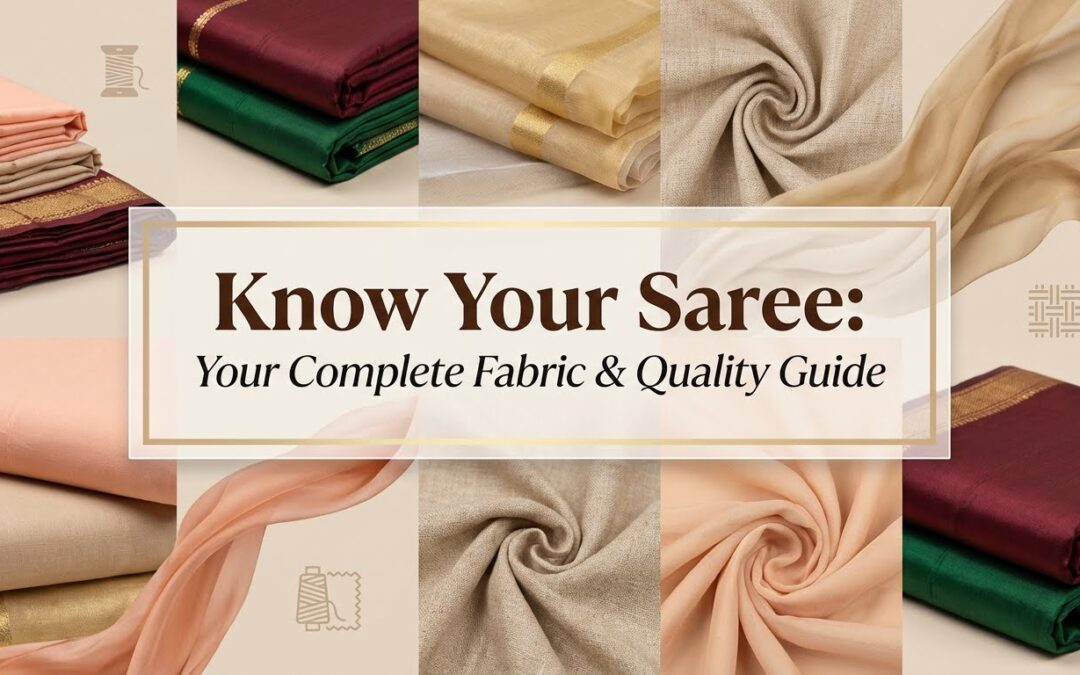
A saree quality guide helps you identify authentic fabrics, understand weaving techniques, and choose the right material for different occasions. The best sarees combine quality fabric, proper weaving, colorfastness, and durability. Common types of saree fabrics include silk, cotton, chiffon, georgette, and handloom varieties, each with unique characteristics and price points.
Contents
- 1 Understanding Saree Quality: What Every Woman Should Know
- 2 Why Saree Quality Matters
- 3 Types of Saree Fabrics: A Complete Overview
- 4 How to Check Saree Quality: A Step-by-Step Guide
- 5 Understanding Thread Count and GSM
- 6 Identifying Pure vs Mixed Fabrics
- 7 Regional Varieties: Types of Saree Fabrics Across India
- 8 Price and Quality: What to Expect
- 9 Color Fastness: An Important Quality Factor
- 10 Weaving Quality: What Makes a Difference
- 11 Choosing Sarees for Different Occasions
- 12 Caring for Your Sarees: Quality Maintenance
- 13 Red Flags: Signs of Poor Quality
- 14 Finding Authentic Quality Sarees in Chennai
- 15 Common Myths About Saree Quality
- 16 Investment Value: Which Sarees Hold Worth
- 17 Sustainable and Ethical Quality Choices
- 18 The Future of Saree Quality
- 19 Making Your Final Decision
- 20 Frequently Asked Questions
Understanding Saree Quality: What Every Woman Should Know
Buying a saree can feel confusing when you walk into a store and see hundreds of options. How do you know if you’re getting good quality? What makes one saree cost 2,000 rupees and another 20,000 rupees?
This saree quality guide will teach you everything you need to know. You’ll learn how to check fabric quality, understand different types of saree fabrics, and make smart buying decisions.
A good saree should last for years. It should feel comfortable on your skin. The colors should stay bright even after washing. And it should look beautiful every time you wear it.
Why Saree Quality Matters
Quality affects how your saree looks and feels. A high-quality saree drapes smoothly around your body. The pleats stay in place. The fabric doesn’t tear easily.
Poor quality sarees cause problems. The fabric might feel rough. Colors can fade after one wash. The material tears quickly. You end up spending more money buying replacements.
When you understand this saree quality guide, you save money in the long run. One good saree that lasts five years costs less than buying five cheap sarees in five years.
Types of Saree Fabrics: A Complete Overview
India produces dozens of different types of saree fabrics. Each fabric has special qualities. Some work better in summer. Others look perfect for weddings. Let’s explore the most popular options.
Silk Sarees: The Traditional Choice
Silk remains the most loved fabric for special occasions. Pure silk feels smooth and looks shiny. It drapes beautifully and makes you look elegant.
Kanjivaram Silk comes from Tamil Nadu. These sarees use thick silk threads. The borders have different colors from the body. Traditional designs include temples, peacocks, and flowers. A real Kanjivaram feels heavy in your hands.
Banarasi Silk originates from Varanasi. Weavers add gold or silver threads to create patterns. These sarees shine under lights. They work perfectly for weddings and festivals.
Tussar Silk has a rough texture compared to other silks. It comes in natural gold and beige colors. This fabric breathes well and suits both formal and casual events.
Mysore Silk feels lighter than Kanjivaram. It has a soft sheen. The fabric drapes easily. These sarees cost less than other silk varieties but still look premium.
How do you check silk quality? Hold the fabric against light. Real silk shows tiny irregular patterns. Burn a small thread from the border. Pure silk smells like burning hair and turns to ash. Artificial silk smells like burning plastic.
Cotton Sarees: Perfect for Daily Wear
Cotton sarees keep you cool in hot weather. They absorb sweat and let your skin breathe. These types of saree fabrics work great for everyday wear.
Handloom Cotton comes from different states. Each region has unique weaving styles. Bengal makes tant cotton. Kerala produces kasavu cotton. These sarees feel soft and comfortable.
Chanderi Cotton mixes cotton with silk threads. The fabric looks sheer and lightweight. You can see through it slightly. Chanderi sarees have traditional coin patterns and floral designs.
South Cotton refers to thick cotton sarees from South India. They last for many years. The fabric handles rough washing. Perfect for daily wear at home or work.
Check cotton quality by touching it. Good cotton feels soft, not scratchy. Pull the fabric gently. It should stretch slightly and return to shape. Check if threads are tight and even.
Chiffon Sarees: Light and Flowing
Chiffon creates beautiful flowing drapes. The fabric feels weightless. It moves gracefully when you walk. Chiffon sarees look modern and stylish.
Real chiffon comes from silk. Most chiffon sarees today use polyester. This makes them cheaper and easier to maintain. Good chiffon should feel smooth and slippery.
This saree quality guide tells you that chiffon needs careful handling. The fabric snags easily. Always store chiffon sarees separately. Use round hangers, not clips that create marks.
Georgette Sarees: Versatile and Practical
Georgette feels slightly thicker than chiffon. It has a crepe-like texture with tiny bumps. The fabric drapes well and doesn’t wrinkle easily.
Pure georgette uses silk threads. Most modern georgette sarees use synthetic fibers. Both types work well for parties and offices. Among different types of saree fabrics, georgette offers the best balance of comfort and style.
Check georgette quality by crumpling it in your hand. Good georgette bounces back without many wrinkles. The fabric should feel grainy but not rough.
Linen Sarees: Modern and Eco-Friendly
Linen comes from flax plants. These sarees feel crisp and cool. The fabric wrinkles naturally, which adds to its charm. Linen works perfectly for summer months.
Quality linen feels strong and thick. It gets softer with each wash. The fabric lasts for decades if you care for it properly. Linen costs more than cotton but offers better durability.
Net and Tissue Sarees: For Special Occasions
Net sarees use mesh-like fabric. They look transparent and delicate. Designers add embroidery or sequins to make them fancy. Net works great as an overlay on other fabrics.
Tissue sarees combine silk with metallic threads. They shimmer and sparkle under lights. The fabric feels thin but looks rich. These sarees make perfect choices for evening events.
How to Check Saree Quality: A Step-by-Step Guide
This saree quality guide gives you simple tests to check any saree before buying.
The Touch Test
Run your fingers across the fabric. Good quality material feels smooth and even. You shouldn’t feel rough patches or bumpy threads. Pure silk feels cool when you first touch it. Cotton should feel soft, not stiff.
The Visual Inspection
Hold the saree against natural light. Look for these signs:
- Even color throughout the fabric
- Tight, uniform weaving with no loose threads
- Straight borders that don’t wave or bend
- Clear patterns with sharp details
- No color bleeding between different sections
The Stretch Test
Gently pull a small section of fabric. Quality material stretches slightly and returns to its original shape. If the fabric stays stretched or if you see gaps between threads, the quality is poor.
The Burn Test
Ask the shopkeeper for a loose thread from the border. Burn it carefully. This test shows you the real fiber content. Remember what different materials smell like when burning.
Check the Weight
Pick up the saree. Good quality silk feels heavy. Cotton should have some weight but not too much. Very light sarees might use mixed fibers or low thread count.
Examine the Border and Pallu
The border and pallu show the real quality. These parts use more threads and complex weaving. Check if the design looks clear. See if the border attaches firmly to the body. Poor quality sarees have borders that come loose quickly.
Look at the Fall and Finishing
A new saree should have proper fall stitching on the border. The edges should be finished neatly. Check if there are loose threads hanging. Quality sarees come with proper finishing work.
Understanding Thread Count and GSM
Thread count tells you how many threads exist in one square inch of fabric. Higher thread count usually means softer, stronger fabric. But very high numbers don’t always mean better quality.
For cotton sarees, look for thread counts between 200 and 400. This range offers good quality at reasonable prices. Counts above 400 feel softer but cost more.
GSM means grams per square meter. It measures fabric weight. Different types of saree fabrics have different GSM ranges:
- Chiffon: 30-50 GSM
- Georgette: 60-80 GSM
- Cotton: 100-150 GSM
- Silk: 120-180 GSM
This saree quality guide helps you understand that both thread count and GSM matter. Use them together to judge quality.
Identifying Pure vs Mixed Fabrics
Many sarees claim to be pure silk or pure cotton but contain mixed fibers. Here’s how to tell the difference.
Pure Silk vs Art Silk
Pure silk comes from silkworm cocoons. Art silk (artificial silk) uses chemicals to create silk-like fabric. Pure silk costs much more.
Pure silk shows irregular shine patterns. Art silk has uniform, plastic-like shine. Pure silk feels cool to touch and warms up slowly. Art silk feels warm immediately.
The burn test works best. Pure silk burns slowly, smells like burning hair, and creates brittle ash. Art silk burns fast, smells like plastic, and creates hard beads.
Pure Cotton vs Mixed Cotton
Some sellers mix polyester with cotton to reduce costs. Pure cotton absorbs water immediately. Mixed cotton repels water for a few seconds.
Put a drop of water on the fabric. Pure cotton soaks it up instantly. If the water sits on top like a bead, the fabric contains synthetic fibers.
Pure cotton wrinkles easily. Mixed cotton stays smooth. This might seem like an advantage, but pure cotton breathes better and feels more comfortable.
Regional Varieties: Types of Saree Fabrics Across India
India’s diverse regions produce unique types of saree fabrics. Understanding regional specialties helps you appreciate quality and authenticity.
South Indian Sarees
Tamil Nadu produces Kanjivaram and Kanchipuram silk sarees. These use pure mulberry silk. The zari (gold thread) traditionally came from real gold and silver. Modern versions use copper threads covered with gold or silver.
Karnataka makes Mysore silk and Ilkal sarees. Mysore silk feels light and smooth. Ilkal cotton sarees have distinctive borders and pallu designs.
Kerala specializes in kasavu sarees. These white or cream cotton sarees have golden borders. The traditional version uses real gold threads.
North Indian Sarees
Uttar Pradesh gives us Banarasi silk. These sarees take weeks or months to weave. The designs include intricate floral and foliate patterns. Real Banarasi uses pure silk and silver or gold zari.
Rajasthan produces Bandhani and Leheriya sarees. These use tie-dye techniques. Each small dot on a Bandhani saree represents individual hand work.
Eastern Indian Sarees
West Bengal makes famous Baluchari and Tant sarees. Baluchari silk shows mythological scenes in the pallu. Tant cotton feels soft and cool, perfect for humid weather.
Odisha produces Sambalpuri and Bomkai sarees. These use ikat technique where threads are dyed before weaving. The patterns look slightly blurred, which proves authenticity.
Western Indian Sarees
Gujarat creates Patola sarees using double ikat technique. These represent some of the finest weaving in the world. Genuine Patola sarees take six months to make and cost lakhs of rupees.
Maharashtra produces Paithani sarees with peacock designs. The borders use interlocked technique where no thread runs from border to body.
Price and Quality: What to Expect
Understanding price ranges helps you spot fake quality claims. This saree quality guide gives you realistic price expectations.
Budget Range (Under ₹2,000)
You can find good quality cotton, synthetic chiffon, and georgette sarees in this range. Don’t expect pure silk. These sarees work fine for daily wear and casual events.
Look for handloom cotton from government emporiums. These offer excellent value. The weaving quality is good, and you support traditional weavers.
Mid Range (₹2,000 to ₹10,000)
This range includes entry-level silk sarees, premium cotton, and designer synthetic sarees. You can get decent Mysore silk, Chanderi cotton-silk, and embroidered georgette.
Pay attention to finishing and design clarity. Mid-range sarees should have good color fastness and neat borders.
Premium Range (₹10,000 to ₹50,000)
Expect good quality Kanjivaram silk, authentic Banarasi, and traditional handloom sarees. The silk should be pure. The zari might still be imitation, but the base fabric will be genuine.
Premium sarees last for generations with proper care. They make good investments for special occasions.
Luxury Range (Above ₹50,000)
This category includes museum-quality pieces. Pure silk with real gold or silver zari. Hand-woven designs that take months to complete. Heritage weaving techniques passed down through generations.
Luxury sarees are heirloom pieces. They appreciate in value over time. Buy only from certified sellers with authentication certificates.
Color Fastness: An Important Quality Factor
Color fastness means how well colors stay in the fabric during washing and use. Poor color fastness ruins your saree and stains other clothes.
Testing Color Fastness
Before first wash, test your saree. Wet a white cloth with cold water. Rub it gently on different colored sections of the saree. If color transfers to the white cloth, the dyes are not set properly.
Some color bleeding in the first wash is normal, especially in handloom sarees using natural dyes. But excessive bleeding indicates poor quality.
Factors Affecting Color Fastness
Natural dyes fade slowly over time but do so evenly. Chemical dyes either hold fast or bleed heavily. The quality of dyeing process matters more than the type of dye.
Handloom sarees from certified weavers usually have better color fastness. Mass-produced cheap sarees often use low-quality dyes that fade quickly.
This saree quality guide recommends always washing colored sarees separately for the first few washes. Use cold water and mild detergent. Avoid direct sunlight when drying.
Weaving Quality: What Makes a Difference
Weaving quality separates ordinary sarees from exceptional ones. Different types of saree fabrics use different weaving techniques.
Handloom vs Powerloom
Handloom sarees are woven manually on traditional looms. Each piece is unique. The weaving shows slight irregularities that prove human touch. Handloom supports traditional craftspeople and produces superior quality.
Powerloom uses machines to weave faster. The fabric looks more uniform. Powerlooms create cheaper sarees but lack the character of handloom pieces.
How do you tell them apart? Handloom sarees have a government certification mark. The weaving shows tiny variations in thread thickness. The selvedge (side edges) look hand-finished.
Powerloom sarees have perfectly uniform weaving. The selvedge looks machine-cut and finished.
Thread Tension
Good weaving maintains even thread tension throughout the fabric. Loose threads create saggy areas that look bad when draped. Too-tight threads make the fabric stiff and uncomfortable.
Hold the saree against light. You should see a consistent weave pattern. No areas should look denser or lighter than others.
Zari Work Quality
Zari refers to gold or silver thread used in saree borders and designs. Real zari uses actual gold or silver wrapped around silk threads. Imitation zari uses copper or brass wrapped in gold or silver colored coating.
Real zari never tarnishes. It stays bright forever. Imitation zari blackens over time when the coating wears off.
Test zari quality by rubbing it gently with a damp cloth. If color comes off, it’s imitation. Real zari won’t transfer any color.
The price difference is huge. Real zari sarees cost significantly more. But they last for generations and can even be melted down for the gold content.
Choosing Sarees for Different Occasions
This saree quality guide helps you select appropriate fabrics for various events.
Daily Wear
Choose comfortable cotton or linen sarees. Look for easy-care fabrics that handle frequent washing. South cotton, tant cotton, and handloom cotton work perfectly.
Daily wear sarees don’t need heavy embroidery or expensive silk. Focus on comfort, durability, and easy maintenance. Darker colors hide stains better.
Office Wear
Pick structured fabrics like cotton-silk blends, georgette, or crepe. These materials don’t wrinkle easily and look professional. Avoid heavily embellished sarees.
Stick to subtle colors and simple designs. The saree should make you look competent and focused, not distract others.
Weddings and Festivals
This is when you bring out silk sarees. Kanjivaram, Banarasi, or Paithani sarees look appropriate for grand celebrations. The rich fabric and elaborate designs match the festive mood.
Consider the weather. Heavy silk sarees feel uncomfortable in summer heat. Lighter Mysore silk or tissue sarees might work better for summer weddings.
Evening Parties
Chiffon, georgette, and net sarees with embellishments suit evening events. These fabrics catch light beautifully. Designer sarees with sequins, beads, or embroidery look glamorous under party lights.
Choose colors and designs that match your personal style. Don’t follow trends that don’t suit your personality.
Caring for Your Sarees: Quality Maintenance
Even the best types of saree fabrics need proper care to maintain quality. Follow these guidelines to make your sarees last longer.
Washing Guidelines
Always check the care label. Different fabrics need different washing methods.
Cotton Sarees: Wash in cold or lukewarm water. Use mild detergent. Cotton handles machine washing, but hand washing extends life. Avoid twisting while drying.
Silk Sarees: Dry clean only for heavily embellished pieces. Simple silk sarees can be hand-washed in cold water with baby shampoo. Never wring silk. Roll in a towel to remove excess water.
Synthetic Sarees: Most georgette and chiffon sarees handle gentle machine washing. Use mesh bags to prevent snagging. Cold water works best.
Embroidered Sarees: Always dry clean. Water can damage sequins, beads, and metallic threads.
Storage Tips
Store sarees in a cool, dry place. Avoid plastic covers that trap moisture. Use cotton or muslin bags instead.
Fold silk sarees differently each time you store them. This prevents permanent crease lines. Place acid-free tissue paper between folds.
Keep different types of saree fabrics separately. Heavy silk sarees can crush delicate chiffon pieces.
Add naphthalene balls or neem leaves to prevent insect damage. Change these every few months.
Ironing Instructions
Iron cotton sarees while slightly damp for best results. Use high heat setting. Iron on the reverse side to protect colors.
Silk sarees need medium heat. Always place a thin cotton cloth between iron and silk. Direct heat can burn silk fibers.
Use low heat for synthetic fabrics. High heat melts polyester and nylon.
Never iron embroidered or sequined sections directly. Cover them with a cloth or iron around them.
Red Flags: Signs of Poor Quality
This saree quality guide warns you about these common quality issues.
Uneven Dyeing
Look for color patches or streaks. Quality sarees have consistent color throughout. Blotchy colors indicate poor dyeing process.
Loose Threads
Check the entire saree for loose or hanging threads. One or two loose threads are normal. Many loose threads show careless finishing.
Weak Borders
Pull gently on the border where it meets the body. It should feel firmly attached. Loose borders indicate poor construction.
Chemical Smell
New sarees have a slight fabric smell. Strong chemical odors suggest low-quality dyes or finishing chemicals. These can cause skin irritation.
Irregular Weaving
Hold the fabric against light. The weave should look consistent. Gaps between threads or very loose sections indicate poor weaving.
Misleading Labels
Some sellers attach fake labels claiming handloom or pure silk. Ask for government certification. Purchase from trusted stores. When in doubt, ask for a return policy.
Finding Authentic Quality Sarees in Chennai
Chennai stands as a major center for quality saree shopping. The city houses traditional silk weavers, handloom cooperatives, and modern boutiques offering authentic types of saree fabrics.
For those seeking genuine quality sarees with proper guidance, Mahaveera Textiles in M.C Road serves as a trusted destination. This establishment combines traditional knowledge with transparent quality assessment, helping customers understand fabric authenticity and make informed choices. Their experienced staff can explain various types of saree fabrics and guide you through the quality checking process. You can reach them at 9841120762 for details about their collection and quality standards.
Common Myths About Saree Quality
This saree quality guide debunks popular misconceptions.
Myth 1: Heavier sarees are always better quality Weight depends on fabric type. Good quality chiffon feels light. Good quality silk feels heavy. Compare weight within the same fabric category.
Myth 2: Handloom always costs more than powerloom Not necessarily. Simple handloom cotton might cost less than designer powerloom sarees with embroidery. Price depends on multiple factors.
Myth 3: Old sarees are better quality Vintage sarees often used better materials, but not always. Modern quality control and dyeing techniques have improved in many ways. Judge each saree individually.
Myth 4: You need expensive sarees for good looks Style matters more than price. A well-chosen, properly draped cotton saree looks better than a poorly selected expensive silk.
Myth 5: Pure silk feels smooth Some silk types like tussar and raw silk feel rough. Smoothness varies by silk variety and processing method.
Investment Value: Which Sarees Hold Worth
Some types of saree fabrics appreciate in value over time. These make good investments beyond their use value.
Heritage Handloom Sarees: Authentic pieces from dying craft traditions increase in value. Patola, traditional Baluchari, and old Paithani sarees become more valuable as fewer weavers practice these crafts.
Pure Silk with Real Zari: The gold or silver content has intrinsic value. These sarees can be considered portable wealth.
Vintage Designer Pieces: Sarees from famous designers become collectibles. Their value increases after the designer retires or passes away.
Regional Specialties with GI Tags: Geographical Indication tagged sarees from specific regions maintain value. Examples include Kanchipuram silk, Banaras brocade, and Pochampally ikat.
Buy investment sarees from certified sellers. Keep all documentation. Store them properly. These pieces can be passed down through generations.
Sustainable and Ethical Quality Choices
Modern consumers care about how products are made. This saree quality guide includes ethical considerations.
Supporting Traditional Weavers
Buying handloom sarees directly supports weaver communities. Many traditional weavers struggle financially. Your purchase helps preserve ancient crafts.
Look for government emporium sarees or cooperatives that ensure fair wages. These sources guarantee authenticity while supporting craftspeople.
Eco-Friendly Fabrics
Natural fabrics like cotton, silk, and linen are biodegradable. They don’t pollute the environment when disposed of. Synthetic fabrics take hundreds of years to decompose.
Some brands now use organic cotton and natural dyes. These sarees cost slightly more but have minimal environmental impact.
Avoiding Fast Fashion Sarees
Cheap, trendy sarees encourage wasteful consumption. They use poor quality materials and exploit workers. These sarees last only a few wears before degrading.
Invest in fewer, better quality sarees. They last longer, look better, and support ethical manufacturing.
The Future of Saree Quality
Technology changes how sarees are made and sold. This saree quality guide looks at emerging trends.
Digital Printing
Modern digital printing creates intricate designs quickly. The quality keeps improving. Digital prints now rival traditional hand-painting in clarity and colorfastness.
Hybrid Techniques
Weavers combine traditional methods with modern tools. They use computer-aided designs but weave on handlooms. This creates unique pieces efficiently.
Online Shopping
Buying sarees online used to be risky. You couldn’t check quality physically. Better photography, detailed descriptions, and reliable return policies now make online shopping safer.
However, checking types of saree fabrics in person remains ideal for expensive purchases. Visit stores to see, touch, and test quality before buying high-value sarees.
Quality Certification
Expect more standardization in quality grading. Government and industry bodies are developing certification systems. These will help consumers identify genuine quality easily.
Making Your Final Decision
You now understand this complete saree quality guide. When shopping for your next saree, remember these key points:
Start by identifying your need. Where will you wear the saree? How often? What’s your budget?
Select appropriate types of saree fabrics for your purpose. Cotton for daily wear, silk for occasions, synthetics for convenience.
Check quality using the tests described in this saree quality guide. Touch the fabric, examine weaving, test color fastness, and verify authenticity.
Buy from reputable sellers. Ask questions. Request certification for expensive sarees. Don’t rush your decision.
Consider long-term value over initial cost. A slightly expensive quality saree that lasts five years costs less per wear than cheap sarees that last six months.
Trust your judgment. If something feels wrong about a saree or seller, walk away. Plenty of authentic options exist.
Frequently Asked Questions
How do I know if a silk saree is pure or fake? Pure silk feels cool when you first touch it and warms up slowly. It shows irregular shine patterns when held against light. The burn test is most reliable: pure silk burns slowly, smells like burning hair, and creates brittle ash that crumbles easily. Fake silk burns quickly, smells like burning plastic, and creates hard beads. Also check for silk mark labels from the Silk Mark Organization of India.
What is the best fabric for daily wear sarees? Cotton is the best fabric for daily wear. It breathes well, keeps you cool, absorbs sweat, and handles frequent washing. South cotton and handloom cotton are particularly durable. These types of saree fabrics last for years with proper care and remain comfortable throughout the day.
How much should I spend on a good quality silk saree? Entry-level quality silk sarees start around ₹5,000 to ₹8,000. Good quality Kanjivaram or Banarasi silk ranges from ₹15,000 to ₹40,000. Premium pieces with intricate work and pure zari cost ₹50,000 or more. Price alone doesn’t guarantee quality, so always check fabric and weaving regardless of cost.
Can I wash silk sarees at home or should I always dry clean? Simple silk sarees without heavy embellishments can be gently hand-washed at home using cold water and mild shampoo. Never wring or twist silk. Roll in a towel to remove water and dry in shade. However, heavily embroidered silk sarees with sequins, beads, or stone work should always be dry cleaned to prevent damage.
How do I identify handloom sarees from powerloom ones? Handloom sarees have slight irregularities in weaving that prove human craftsmanship. The edges (selvedge) look hand-finished rather than machine-cut. Check for the handloom certification mark – a triangle with a symbol inside. The fabric feels different in hand, with a unique texture. Handloom sarees also cost more due to labor-intensive production.
What does thread count mean in sarees and why does it matter? Thread count indicates how many threads exist per square inch of fabric. Higher thread count generally means softer, smoother, and more durable fabric. For cotton sarees, 200-400 thread count offers good quality. Very high thread counts (above 400) feel softer but cost significantly more. This measurement helps you compare quality within the same fabric type.
How can I tell if the zari work is real gold or imitation? Real zari (gold or silver thread work) never tarnishes or changes color. Rub it gently with a damp cloth – real zari won’t transfer any color. Imitation zari blackens over time as the coating wears off. Real zari feels heavier and more flexible than imitation. Check the price too – genuine gold or silver zari increases costs dramatically.
Which types of saree fabrics work best for hot and humid weather? Cotton, linen, and tussar silk work best in hot, humid conditions. These fabrics absorb moisture and allow air circulation. Among types of saree fabrics, handloom cotton from Bengal (tant) and Kerala (kasavu) are specifically designed for humid climates. Avoid heavy silks and synthetic fabrics that trap heat and moisture.
How should I store expensive silk sarees to maintain their quality? Store silk sarees in cool, dry places away from direct sunlight. Use cotton or muslin bags instead of plastic covers that trap moisture. Refold along different lines every few months to prevent permanent creases. Place acid-free tissue paper between folds. Add naphthalene balls or neem leaves to prevent insect damage. Air out silk sarees occasionally.
What is the difference between Kanjivaram and Banarasi silk sarees? Kanjivaram sarees come from Tamil Nadu and use thick mulberry silk with heavy borders in contrasting colors. They feature temple and peacock motifs and feel quite heavy. Banarasi sarees from Varanasi have intricate brocade work with gold or silver zari creating floral patterns. They’re lighter than Kanjivaram and have a distinct shine. Both are premium quality but represent different regional weaving traditions.
Are expensive sarees always better quality than affordable ones? Not necessarily. Price reflects multiple factors including brand, design complexity, and marketing costs, not just fabric quality. Some expensive sarees use good marketing but average quality. Meanwhile, handloom cooperatives offer excellent quality at reasonable prices. This saree quality guide teaches you to judge quality through physical inspection rather than price alone.
How often should I dry clean my sarees? Dry clean only when necessary, as chemicals can wear down fibers over time. Cotton sarees rarely need dry cleaning – hand or machine washing works fine. Silk sarees should be dry cleaned once before first wear and then only when visibly soiled. Synthetic sarees can be washed at home. Over-cleaning reduces saree lifespan more than normal wear.
Can I trust online saree shopping for quality products? Online shopping can be safe if you buy from reputable sellers with clear return policies. Read detailed product descriptions and check fabric composition. Look for close-up photos showing weave detail. Read customer reviews mentioning quality. However, for expensive silk sarees or investment pieces, buying in person allows you to test quality using this saree quality guide’s methods.
What causes saree colors to fade and how can I prevent it? Colors fade due to harsh detergents, hot water, direct sunlight during drying, and poor quality dyes. Prevent fading by washing colored sarees in cold water with mild detergent. Dry in shade, never under direct sun. Wash colored sarees separately for first few washes. Use color-protecting detergents. Hand washing is gentler than machine washing.
Is there a difference between wedding silk and regular silk sarees? Wedding silk sarees typically use heavier silk with more elaborate zari work and intricate designs. They’re made to withstand long wearing hours while looking impressive. Regular silk sarees might use lighter weight silk with simpler designs. Both can be pure silk, but wedding pieces usually represent premium quality within their type.
Final Thoughts
Understanding this saree quality guide empowers you to make confident buying decisions. You can now identify different types of saree fabrics, test their quality, and choose appropriate pieces for various occasions. Whether you’re buying your first saree or your hundredth, these quality checking methods ensure you get value for money. Remember that quality combines multiple factors – fabric authenticity, weaving technique, color fastness, and finishing. A truly good saree feels comfortable, looks beautiful, and lasts for years, making every rupee spent worthwhile.