
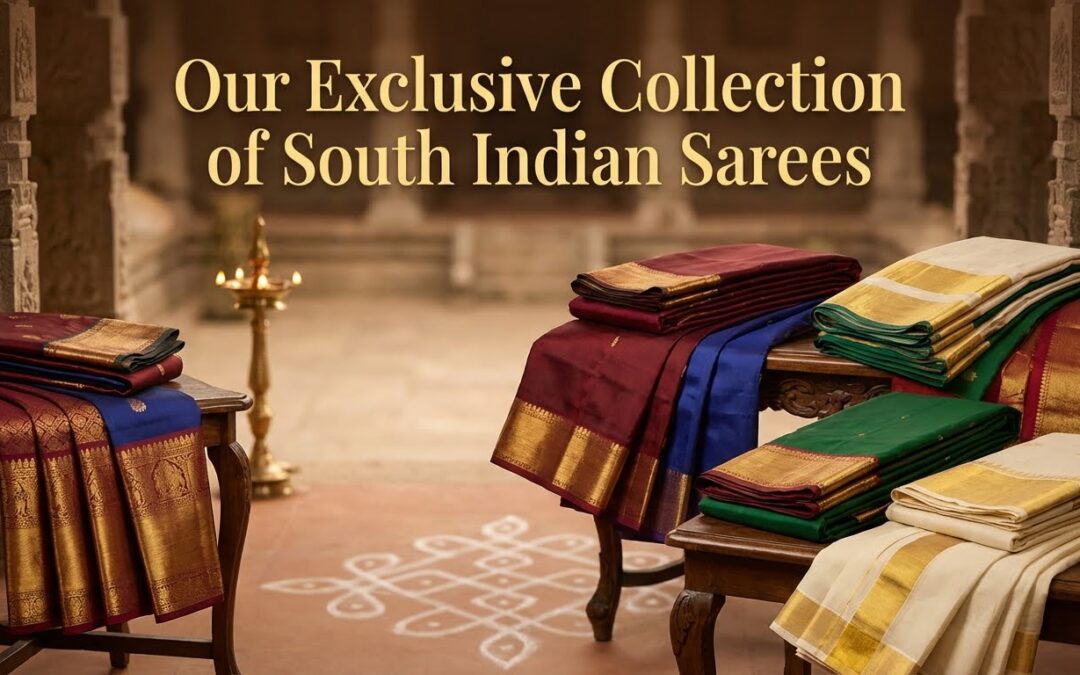
South Indian sarees are traditional handwoven garments known for their rich silk fabric, intricate zari work, vibrant temple-inspired designs, and cultural significance. These sarees include famous varieties like Kanjivaram, Mysore silk, and Chettinad cotton, each featuring distinctive weaving techniques passed down through generations. Perfect for weddings, festivals, and special occasions, these sarees combine luxury with comfort and represent the artistic heritage of Tamil Nadu, Karnataka, and Kerala.
Contents
- 1 Introduction
- 2 Understanding South Indian Sarees
- 3 Fabrics Used in South Indian Sarees
- 4 Weaving Techniques and Craftsmanship
- 5 Design Patterns, Borders and Colors
- 6 Occasions to Wear South Indian Sarees
- 7 How to Identify Quality
- 8 Saree Care, Washing and Storage Tips
- 9 Price Range and Buying Guide
- 10 Frequently Asked Questions
- 11 Conclusion
- 12 Contact Mahaveera Textiles
Introduction
Mahaveera Textiles proudly presents an exclusive collection that celebrates the timeless beauty and cultural richness of traditional Indian weaving. Our carefully curated selection brings together the finest examples of craftsmanship from renowned weaving centers across Tamil Nadu, Karnataka, and Kerala. Understanding the unique characteristics of South Indian sarees helps buyers appreciate the artistry, quality, and cultural heritage embodied in each piece.
For women seeking authentic ethnic wear for weddings, festivals, or special occasions, knowing what makes these garments special ensures confident purchasing decisions. The tradition of South Indian sarees spans centuries, with each region developing distinctive styles, patterns, and weaving techniques. Mahaveera Textiles maintains direct relationships with master weavers and artisan communities, ensuring every piece meets the highest standards of authenticity and quality.
This comprehensive guide explores our exclusive collection, explaining the different varieties available, their unique features, styling options, and care requirements. Whether you are building a bridal trousseau, adding to your festive wardrobe, or discovering these beautiful garments for the first time, understanding what makes each type special will help you select pieces that bring lasting joy and satisfaction.
Understanding South Indian Sarees
The weaving traditions of South India have created some of the world’s most luxurious and culturally significant textiles. These garments represent more than fashion—they embody regional identity, spiritual symbolism, and artistic excellence refined over generations. What distinguishes South Indian sarees from other regional styles is the emphasis on pure silk, heavy zari work, rich colors, and intricate patterns inspired by temple architecture and natural motifs.
Kanjivaram silk from Tamil Nadu stands as the most celebrated variety, known internationally for its durability, weight, and distinctive three-shuttle weaving technique. The silk used is thick and lustrous, often combined with pure zari to create borders and pallus that shimmer beautifully. Each Kanjivaram piece requires weeks of skilled labor, with master weavers following traditional patterns while incorporating contemporary color preferences.
Mysore silk from Karnataka offers a lighter alternative with its own distinctive charm South Indian sarees. The silk is finer and softer, creating elegant drapes perfect for extended wear during ceremonies. The designs tend toward subtle sophistication rather than the bold statements of Kanjivaram, making Mysore silk ideal for those preferring understated luxury.
At Mahaveera Textiles, our collection includes authenticated pieces from these renowned weaving centers. We work directly with artisan families who have practiced their craft for generations, ensuring that every piece carries the authentic characteristics that define quality. Our staff can explain the distinctive features of each variety, helping customers understand what they are purchasing and why these garments command respect and appropriate pricing.
Fabrics Used in South Indian Sarees
The foundation of quality lies in material selection. Traditional weaving from this region emphasizes pure silk, though cotton varieties also hold important places in the textile heritage. Understanding fabric types helps buyers select pieces appropriate for different occasions and climates.
Natural Fabrics
Pure mulberry silk forms the backbone of luxury varieties. The silk used in traditional weaving comes from carefully cultivated silkworms, with the finest grades reserved for premium pieces. This natural protein fiber provides distinctive smoothness, natural sheen, and excellent drape characteristics. The weight and thickness of silk vary by type—Kanjivaram uses heavier silk than Mysore, creating different wearing experiences.
Cotton plays an essential role in daily wear and summer-appropriate styles South Indian sarees. Chettinad cotton from Tamil Nadu is particularly prized for its durability and comfort. These handloom cottons feature bold checks, broad borders, and vibrant colors that remain practical while maintaining traditional aesthetics. Cotton sarees suit India’s tropical climate while preserving regional design languages.
Silk, Cotton and Blended Variants
Pure silk varieties represent the pinnacle of traditional weaving. The silk undergoes minimal processing to preserve its natural properties, resulting in fabric that breathes despite its richness. South Indian sarees. Quality silk has a characteristic rustling sound, warms quickly when held, and displays natural luster without appearing artificially glossy.
Silk-cotton blends offer practical alternatives that combine the sheen of silk with cotton’s comfort at more accessible prices. These blends suit those building versatile wardrobes that span formal occasions and comfortable daily wear. The proportion of each fiber determines the final characteristics, with higher silk content creating more formal appearances.
Mahaveera Textiles clearly indicates fabric composition for every piece in our collection. Our staff can explain how different materials behave, which fabrics suit specific occasions, and how to care for each type properly. This transparency ensures customers make informed decisions aligned with their needs and budgets.
Weaving Techniques and Craftsmanship
The distinctive character of traditional southern weaving comes from specialized techniques developed and refined over centuries. The three-shuttle weaving method used in Kanjivaram creation sets these pieces apart from other silk sarees. This technique allows for contrasting borders woven simultaneously with the body, South Indian sarees, creating seamless integration that enhances durability and visual appeal.
Master weavers spend years learning pattern execution, tension management, and color coordination South Indian sarees. The complexity of temple-inspired motifs, peacock designs, and geometric patterns requires not just technical skill but artistic sensibility. Each throw of the shuttle is a conscious decision that contributes to the final appearance.
Zari work represents another crucial element of traditional craftsmanship. Authentic pieces use real silver threads coated with gold, creating metallic embellishments that age beautifully and maintain their luster. The zari integrates into the weaving rather than being applied afterward, ensuring durability through decades of wear.
At Mahaveera Textiles, we verify the authenticity of weaving techniques in every piece we source. South Indian sarees,Our relationships with artisan communities ensure we receive genuine handloom products that honor traditional methods. Customers can trust that the craftsmanship they pay for is authentic and executed by skilled weavers who understand their heritage.
Design Patterns, Borders and Colors
Design elements define the aesthetic identity of traditional southern textiles. Temple architecture heavily influences pattern development, with gopuram (temple tower) motifs, pillared halls, and deity figures appearing frequently. These spiritual references connect the garments to cultural and religious heritage, making them particularly appropriate for ceremonies and celebrations.
Borders and pallus showcase the weaver’s highest artistic achievements. Traditional pieces feature broad, contrasting borders that frame the body beautifully. Common border widths range from three to six inches, South Indian sarees,with the most elaborate pieces featuring even wider decorative bands. The pallu displays intricate pattern work that can include rows of peacocks, elephants, floral vines, or geometric arrangements.
Color combinations follow both traditional preferences and contemporary trends. Classic choices include deep reds, royal blues, rich greens, and vibrant purples, often contrasted with gold or silver borders. Temple colors—combinations like red with green, blue with gold, or purple with pink remain popular for their auspicious associations and visual impact.
Mahaveera Textiles maintains an extensive design library spanning traditional classics and contemporary interpretations. Our collection includes rare antique patterns alongside modern color combinations, South Indian sarees,ensuring customers find pieces that resonate with their personal style while honoring cultural heritage.
Occasions to Wear South Indian Sarees
Understanding appropriate occasion matching helps buyers build practical wardrobes that serve various needs. Heavy silk pieces with elaborate zari work suit weddings, religious ceremonies, and formal celebrations where traditional elegance is expected. These investment pieces become family heirlooms, treasured across generations and worn during significant life events.
Weddings represent the primary occasion for showcasing the finest examples. Bridal traditions across South India feature these luxurious silks prominently, with specific colors and designs considered auspicious for marriage ceremonies. The weight and richness of fabric, extensive zari work, and bold color combinations create presence appropriate for this momentous occasion.
Festivals and religious celebrations call for silk sarees that balance tradition with practical considerations. Mid-range pieces that feature good quality silk and moderate embellishment suit South Indian sarees these recurring occasions well. The investment proves worthwhile as these sarees remain appropriate for years of festival celebrations, temple visits, and family gatherings.
Contemporary settings increasingly embrace these traditional garments. Lighter silk varieties and innovative draping styles make southern silks accessible for modern social events, cultural programs, and professional settings where ethnic wear is appropriate. Mahaveera Textiles helps customers select pieces suitable for diverse occasion requirements, ensuring satisfaction with every purchase.
How to Identify Quality
Recognizing quality markers protects buyers from inferior products and ensures satisfaction with their investments. Several factors distinguish authentic, well-made pieces from mass-produced alternatives or misrepresented products.
Pure silk displays distinctive characteristics including natural sheen, smooth texture, and a subtle rustling sound when handled. The fabric should warm quickly when held, unlike synthetic alternatives that remain cool. Testing a small hidden area with water reveals whether the silk is genuine—pure silk absorbs moisture slowly while synthetics often repel water or absorb too quickly.
Zari quality significantly impacts both appearance and value. Traditional zari contains silver threads coated with gold, creating distinctive luster and flexibility. Testing involves examining how the metallic threads bend and catch light. Pure zari has weight and moves fluidly, while imitation zari appears rigid and plasticky. Mahaveera Textiles provides detailed information about zari composition for every piece, ensuring transparency in purchasing.
Border and pallu attachment indicates construction quality. In authentic handloom pieces, these elements are woven as integral parts of the fabric rather than, South Indian sarees separately attached afterward. Examining the attachment points reveals whether the saree is woven continuously or assembled from sections. Understanding regional variations prevents mistaking legitimate construction techniques for inferior quality.
Thread count and weave density affect both appearance and durability. Higher thread counts generally indicate better quality, creating fabric that drapes well and withstands years of use. The weave should be tight and uniform without loose threads or gaps. Running your hand along the fabric reveals consistency—any rough patches suggest quality issues unless they are intentional texture elements in specific traditional styles.
Saree Care, Washing and Storage Tips
Proper maintenance preserves beauty and extends the life of these valuable garments for decades. Different fabrics and embellishment levels require specific handling approaches. South Indian sarees,Understanding care requirements ensures your investment remains pristine through years of wearing.
Silk pieces generally require dry cleaning to protect delicate fibers and prevent color bleeding. First-time cleaning is particularly important for setting dyes and removing any manufacturing residues. Subsequently, pieces worn without direct skin contact might be aired and spot-cleaned rather than fully cleaned after each use, South Indian sarees,reducing chemical exposure and preserving fabric integrity.
Cotton varieties typically tolerate hand washing using mild detergents formulated for delicate fabrics. Soaking time should be minimal to prevent color fading, especially South Indian sarees,for pieces with vegetable-based dyes. Thorough rinsing removes all soap residue that could attract dirt or cause fabric degradation over time. Wringing must be gentle to avoid distorting the weave structure.
Storage practices prevent damage from environmental factors and pests. Individual wrapping in muslin cloth or acid-free tissue protects each piece while allowing fabric to breathe. South Indian sarees,Avoiding plastic bags prevents moisture accumulation that promotes mildew growth. Natural insect repellents like neem leaves or cedar blocks protect against moths without chemical residues that might damage delicate fabrics.
Mahaveera Textiles provides specific care instructions with each purchase, tailored to the particular fabric and embellishment characteristics of your chosen piece. Our staff can demonstrate proper folding techniques and recommend trusted dry cleaning services familiar with handling valuable silk textiles.
Price Range and Buying Guide
Understanding pricing structures helps buyers make informed South Indian sarees decisions aligned with their budgets and needs. Multiple factors contribute to final costs, and recognizing these ensures appropriate value assessment.
Material costs form the foundation of pricing. Pure silk naturally costs more than cotton or blended alternatives. Within silk categories, Kanjivaram commands premiums due to specific silk quality and traditional production methods. The weight of silk used—heavier pieces require more raw material—directly impacts pricing.
Weaving complexity significantly affects costs. Simple designs with minimal pattern work can be produced relatively efficiently, while elaborate temple motifs or extensive zari work requires weeks or months of skilled labor. The number of colors used, pattern intricacy, and zari extent all contribute substantially to final pricing.
Zari composition creates dramatic price variations. Pieces with pure silver and gold zari cost significantly more than those using imitation alternatives. Understanding exactly what zari type you are purchasing ensures pricing aligns appropriately with materials provided. Mahaveera Textiles clearly indicates zari quality for every piece, supporting confident purchasing decisions.
Our collection spans multiple price points, ensuring accessibility for various budgets. Entry-level pieces include quality cotton handlooms and simpler silk designs suitable for South Indian sarees building foundational wardrobes. Mid-range options encompass good quality silks with moderate zari work appropriate for festivals and special occasions. Premium pieces represent significant investments justified by exceptional silk quality, extensive handwork, and artistic merit that creates family heirlooms.
Frequently Asked Questions
What makes authentic South Indian sarees different from other silk sarees?
Traditional southern silk features distinctive characteristics including heavier silk weight, extensive zari work, bold contrasting borders, and temple-inspired motifs. The three-shuttle weaving technique used in Kanjivaram creation creates seamless border integration impossible with other methods. These pieces emphasize durability and richness, designed to withstand decades of wear while maintaining their beauty. The cultural and spiritual symbolism woven into designs connects these garments to regional heritage in ways that distinguish them from other silk varieties.
How can I verify if I am buying genuine Kanjivaram or Mysore silk?
Authentic pieces display several verification markers including pure silk characteristics, traditional zari work, proper weave density, and distinctive design elements specific to each region. Pure silk has natural sheen, rustling sound, and warms when held. Traditional zari shows flexibility and distinctive luster. Mahaveera Textiles provides authenticity certificates with all premium silk purchases and works directly with verified artisan communities, ensuring genuine products throughout our collection.
Does Mahaveera Textiles offer customization options?
Yes, we work with customers on custom orders when feasible, particularly for bridal collections. Customization might include specific color combinations, border modifications, or incorporating particular motifs. The process requires advance planning since traditional weaving involves multiple artisans and can take weeks or months depending on complexity. Contact our store directly to discuss customization possibilities, timeline requirements, and pricing for bespoke pieces.
What occasions are most appropriate for wearing heavy silk sarees?
Heavy silks suit weddings, religious ceremonies, formal cultural events, and significant family celebrations where traditional elegance is expected. The weight and richness of these garments create presence appropriate for momentous occasions. Lighter silk varieties and cotton options work better for extended wear during festivals, temple visits, and events requiring comfort alongside traditional aesthetics. Our staff can guide you in selecting pieces appropriate for specific occasion requirements.
How should I store my silk sarees from Mahaveera Textiles?
Store each piece individually wrapped in muslin cloth or acid-free tissue paper, avoiding plastic bags that trap moisture. Keep them in cool, dry conditions away from direct sunlight that can fade colors. Refold periodically along different lines to prevent permanent creases from developing. Use natural insect repellents like neem leaves or cedar blocks. For particularly valuable pieces, consider padded hanger storage if space allows. Proper storage significantly extends the life of your investment.
What is the significance of temple motifs in traditional designs?
Temple-inspired patterns connect these garments to spiritual and cultural heritage. Gopuram motifs represent temple towers, while deity figures and ritual symbols carry religious significance. These designs make the sarees particularly appropriate for religious ceremonies and auspicious occasions. The symbolism adds meaning beyond aesthetic appeal, creating garments that honor cultural traditions while showcasing artistic excellence.
Can Mahaveera Textiles help identify rare or antique pieces?
Our staff has extensive knowledge of traditional weaving characteristics and can help customers identify authentic pieces including rare vintage examples. We understand the distinctive features of various regional styles and can explain the significance of specific patterns or techniques. For customers seeking rare pieces or building collections, we can discuss availability of special examples and connect you with appropriate options from our network of artisan communities.
Why do prices vary so much between similar-looking sarees?
Price differences reflect variations in silk quality, zari composition, weaving complexity, and production time. Two visually similar sarees might use different silk grades or different zari types—one with pure silver and gold, another with imitation metallic threads. Handloom versus power loom production also affects pricing. Understanding these factors helps assess whether pricing aligns with materials and craftsmanship provided. We ensure transparent communication about what determines each piece’s price.
Are blended silk-cotton sarees appropriate for traditional occasions?
Blended varieties offer practical alternatives suitable for many traditional occasions, particularly festivals and family gatherings where comfort matters alongside aesthetics. While pure silk remains preferred for the most formal ceremonies like weddings, quality blends have gained acceptance for their versatility and accessibility. The key is selecting appropriate designs and ensuring the blend ratio provides desired appearance and drape characteristics.
Does your collection include cotton options for daily wear?
Yes, our collection includes handloom cotton varieties like Chettinad cotton that maintain traditional design aesthetics while offering comfort and practicality for daily wear. These pieces feature characteristic bold checks, broad borders, and vibrant colors suitable for everyday use, office environments, and casual social occasions. Cotton sarees form essential foundations for practical wardrobes while honoring regional weaving traditions.
Conclusion
Our exclusive collection at Mahaveera Textiles celebrates the extraordinary artistic heritage and cultural significance embodied in traditional southern textiles. From the heavy luxury of Kanjivaram silk to the comfortable elegance of handloom cotton, each piece represents the culmination of centuries of weaving expertise, regional identity, and artistic dedication. Understanding what makes these garments special—from material selection through traditional weaving techniques to symbolic design elements—transforms purchasing from simple shopping into cultural appreciation and informed investment.
The tradition of South Indian sarees spans generations of artisan families who have dedicated their lives to preserving and advancing their craft. When you purchase authentic pieces from Mahaveera Textiles, you participate in sustaining these communities, supporting traditional skills, and ensuring that future generations can continue experiencing the beauty and cultural richness of these magnificent textiles. Your investment goes beyond personal wardrobe building to cultural preservation and ethical support of artisan livelihoods.
For buyers seeking authentic ethnic wear for weddings, festivals, or special occasions, quality matters deeply. Recognizing the markers of genuine craftsmanship—pure silk, traditional zari work, authentic weaving techniques, and cultural design elements—ensures satisfaction with purchases that bring lasting joy. Whether building a bridal trousseau, expanding festive wardrobes, or discovering these beautiful garments for the first time, informed purchasing creates confidence and appreciation.
Mahaveera Textiles stands committed to providing authenticated pieces backed by expertise and transparent communication. Our direct relationships with artisan communities ensure every piece meets the highest standards while supporting fair compensation for skilled weavers. Our knowledgeable staff can guide you through selection, explaining the distinctive features of various types, helping match pieces to occasions, and providing care instructions that protect your investment through decades of wearing.
As you explore traditional southern textiles, remember that these garments offer more than fashion—they provide connection to cultural heritage, artistic excellence, and meaningful traditions. The pieces you select become part of your family’s story, worn during important occasions and cherished across generations. We invite you to visit Mahaveera Textiles to experience our collection firsthand and discover pieces that will bring beauty and cultural pride to your wardrobe for years to come.
Contact Mahaveera Textiles
For those seeking authentic traditional textiles crafted with expertise and cultural authenticity, Mahaveera Textiles offers comprehensive collections spanning daily wear cotton to luxurious bridal silk varieties.
Business Name: Mahaveera Textiles
Phone Number: 9841120762
Location: M.C Road, Chennai
Visit our store to experience our exclusive collection firsthand, receive personalized guidance from knowledgeable staff, and discover pieces that perfectly match your requirements. Whether you are a first-time buyer or an experienced collector, Mahaveera Textiles welcomes you to explore the beautiful world of traditional Indian textiles.